

When an ex asks for a second chance, start by naming what ended the relationship and asking what has changed since. You can miss your ex, care about them and still need time before you decide whether to meet or reconnect.
On this page

Name the reason it ended
Pick one or two concrete examples. Maybe you disagreed about having children, or they often stopped speaking to you during disagreements. A life goal may still be incompatible even after a sincere apology. A recurring behavior calls for specific changes you can observe over time.
Look for changes already under way
Ask “What are you doing differently now?” A useful answer acknowledges what happened and identifies actions already being taken. Look at how they respond to a limit or a delay. Respecting a request for space is one change you can see without restarting the relationship.
Give yourself time when there’s pressure
Loneliness, good memories and encouragement from family can make a reunion feel urgent. Write down what you would need to see before deciding, and tell a trusted person how you want them to support you. You can say “I’ll let you know if I want to talk again. Please give me room to decide.”
Choose the next step you’re comfortable taking
If you want to talk, agree to one conversation and think about it afterward before making more plans. Keep your own practical arrangements in place while you decide. If the relationship involved threats, stalking, violence or control, speak with someone you trust or a local domestic abuse service about safe options before resuming contact.
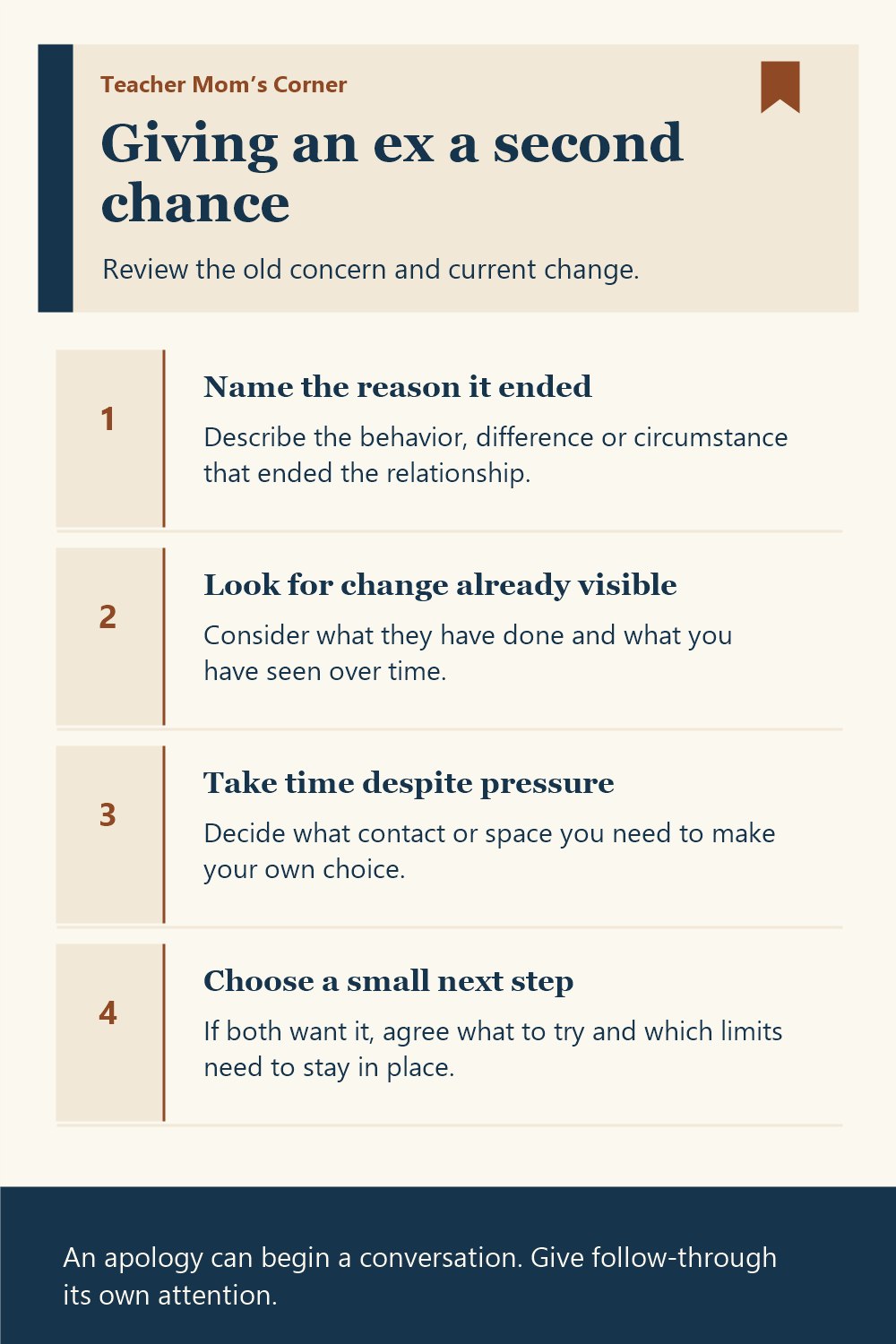
Read the infographic in text
Giving an ex a second chance
Review the old concern and current change.
- Name the reason it ended Describe the behavior, difference or circumstance that ended the relationship.
- Look for change already visible Consider what they have done and what you have seen over time.
- Take time despite pressure Decide what contact or space you need to make your own choice.
- Choose a small next step If both want it, agree what to try and which limits need to stay in place.
An apology can begin a conversation. Give follow-through its own attention.