

When you have feelings for a friend, small moments can start to look like clues: a message, a hug or an invitation to spend time together. Those moments may matter to you, but they cannot establish what the other person wants. A clear, respectful conversation is more useful than a list of supposed secret signs.
Friendship is valuable in its own right. Neither person owes romance, physical affection or an explanation of private feelings because you have been close.
On this page

1. Separate interest from assumptions
Your friend might be unsure, interested, unavailable or content with friendship. You do not need to decide which explanation fits before asking. Avoid telling yourself that they are waiting for a dramatic first move or that silence means an invitation.
Calling you a close friend does not secretly mean partner. Take the words seriously unless they tell you something different. Affection within a friendship can be real and important without being romantic.
Eye contact, nervousness and smiling can have many meanings. They are not a reliable substitute for asking about a date. Consider your own hopes when you interpret an interaction; wanting a particular answer can make an ambiguous moment feel certain.
Remembering birthdays or helping during a hard week can be ordinary friendship. Appreciate the care without treating it as a debt that should be repaid with romantic interest. You can value the connection and still need clarity about your feelings.
2. Respect physical and personal boundaries
Ask before changing physical contact: “Would you like to hold hands?” Leave room for an easy refusal. Love is respect explains that consent needs to be freely given for the activity each time; past affection does not establish permission now.
Spending time alone is not automatically a date or agreement to intimacy. Keep the arrangement clear. Meeting for coffee, studying together or sharing a journey can mean exactly what was discussed.
A friend may ask about your past relationships out of care or curiosity. You can decline to share. Avoid questioning them about private experiences as a test of interest or comparing yourself with previous partners.
Body language does not come with fixed rules for men or women. Hair touching, posture and proximity cannot tell you that someone wants romance. If someone seems uncomfortable, give them space instead of trying to decode or overcome the response.
3. Make one clear invitation
Choose a moment that does not trap them in a car, workplace task or public performance. You might say, “I like spending time with you, and I am interested in going on a date. Would you like that?” Keep it simple and allow time to answer.
If they say yes, agree on what the invitation means and make a modest plan. One date does not settle exclusivity or the future of the friendship. You can discuss the next step as you learn how you both feel.
If flirting has been playful or unclear, you can ask what they mean. You do not have to match their tone or escalate physical contact to find out. Directness can be gentle and gives both people a chance to choose.
Keep the conversation between the people involved. Avoid asking mutual friends to persuade them, report their movements or gather private information. Someone else’s opinion about your chemistry does not decide what your friend wants.
You do not need to change your clothes, body or personality to perform a gender role. Aim to be honest about your interest and considerate of their answer. Our guide to romantic chemistry and a safe pace considers interest alongside compatibility.
A no, a request for friendship or a decision not to date deserves respect. Repeated hints and invitations after a refusal add pressure. If the answer remains unclear, you can treat dating as unagreed and decide whether you need space.
4. Take unwanted pursuit seriously
Following someone, watching from a distance, tracking their location or repeatedly appearing where they will be is not made acceptable by friendship. Do not use access to their routines or accounts to engineer contact. Respect a request for distance.
Jealousy does not prove love or entitlement. If you feel it, step back and choose what you will do with the feeling. Avoid creating a jealousy test or expecting your friend to stop seeing other people.
Anger, threats or intimidation after a refusal are safety concerns. You are not responsible for accepting a date to calm someone. The National Domestic Violence Hotline offers stalking safety planning information if unwanted contact makes you afraid.
You can seek help from someone you trust or a local specialist service without proving another person’s motives. In immediate danger, contact emergency services where you are. Avoid meeting privately because someone promises that one conversation will end the pursuit.
5. Choose what friendship can look like
After different feelings become clear, either person may need time or less contact. You can say, “I respect your answer. I need a little space to settle my feelings.” Space should support your own wellbeing, not be a tactic to make them reconsider.
Do not use another date, a social post or deliberate withdrawal to provoke jealousy. If a friendship continues, consider what feels comfortable to both of you. It may remain close, change shape or end; there is no outcome you must force.
Keep other friendships, interests and support in your life. You can feel disappointed and still behave with respect. Begin with one honest invitation or one clear boundary, and let the other person’s choice count.
Read the infographic in text
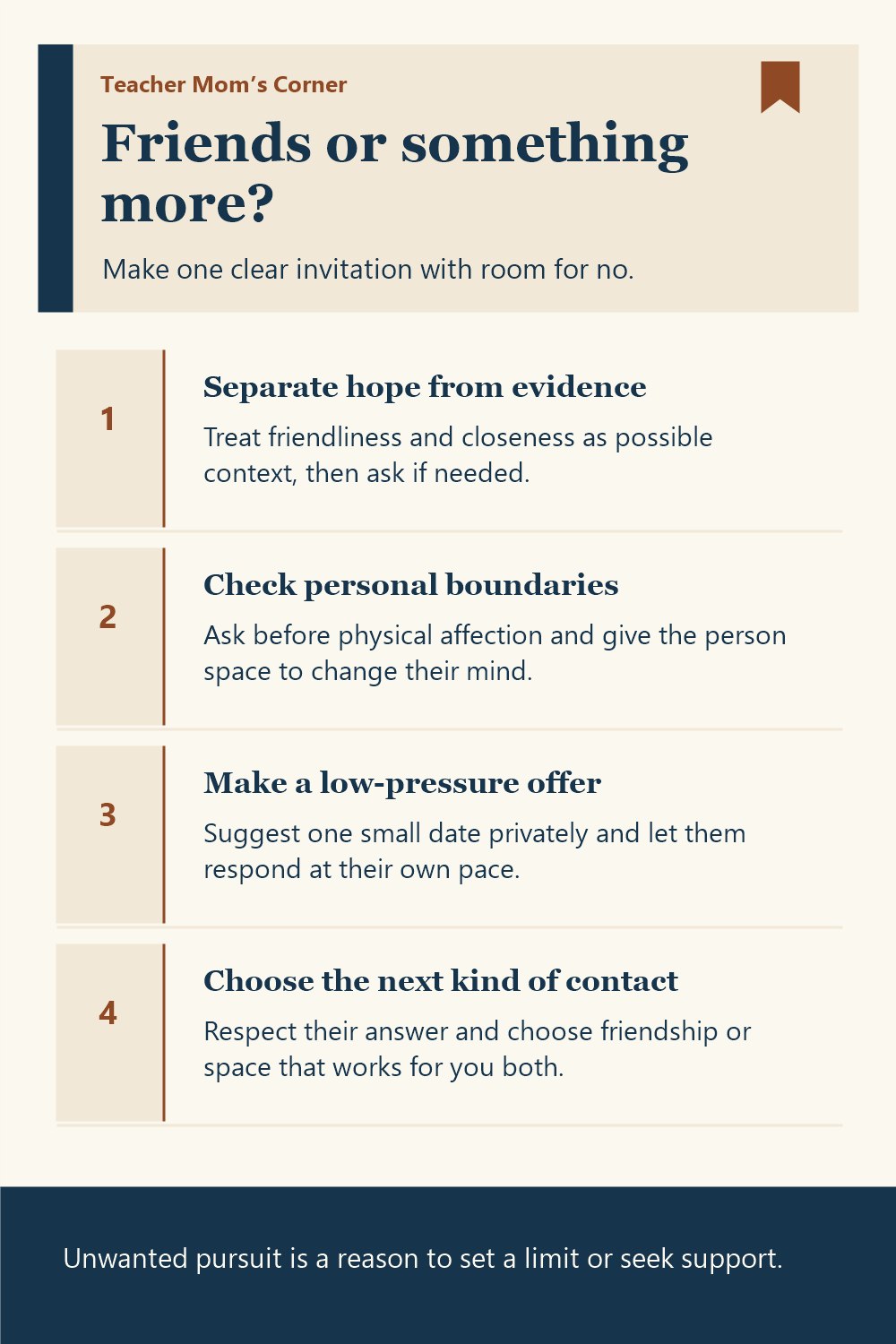
Friends or something more?
Make one clear invitation with room for no.
- Separate hope from evidence Treat friendliness and closeness as possible context, then ask if needed.
- Check personal boundaries Ask before physical affection and give the person space to change their mind.
- Make a low-pressure offer Suggest one small date privately and let them respond at their own pace.
- Choose the next kind of contact Respect their answer and choose friendship or space that works for you both.
Unwanted pursuit is a reason to set a limit or seek support.