

Replaying a date or wondering what a message meant can leave you unsure what to do next. If the same questions keep circling, it may help to separate what you know, what you need to ask and what you cannot settle yet.
You do not have to become perfectly relaxed to date or deserve respectful treatment. These six steps offer ways to work with uncertainty while keeping room for your own needs, responsibilities and beliefs.
On this page

1. Notice the concern and separate facts from guesses
Write one sentence about the thought that keeps returning. “They have not replied since yesterday” describes an event. “They must regret meeting me” adds an explanation you do not yet know. You can feel disappointed or unsettled while keeping that distinction.
Look at the context you actually have: a missed arrangement, an unanswered question or a different pattern of contact. Avoid building a verdict from punctuation, the timing of a social post or a single awkward moment on a date. A concern deserves attention, but repeatedly reviewing the same clues may give you little new information.
Be specific about what matters to you. Perhaps you want clearer plans, an answer about exclusivity or more notice when someone cancels. Naming that need gives you something useful to consider.
2. Choose what you can act on today
Ask whether there is a practical step available. You might confirm an arrangement, decide how long to keep an evening free or make another plan if a date remains uncertain. Keep the step small and within your own control.
Some questions have no answer yet: whether this relationship will last, how every future date will go or what another person privately thinks. Replaying a conversation cannot settle all of them. You can acknowledge that the answer is unknown and choose what you are willing to do with the information available.
The NHS guide to tackling worries suggests writing concerns down, distinguishing actionable problems from hypothetical worries and setting aside a short time to consider them. Try a manageable version if it helps, and adjust it to your circumstances.
3. Ask a clear question when you need information
If contact has changed, describe the change and ask about the arrangement you want to understand. For example: “I enjoyed meeting you. Would you like to arrange another date?” or “We have not confirmed Saturday. Can we decide by Thursday?”
Give the other person room to answer freely. You can request clarity without demanding constant availability, testing their feelings or expecting them to remove every uncertainty. Their answer may be welcome, disappointing or incomplete; it still offers more to work with than a guessed motive.
If the issue is an ongoing pattern, our guide to inconsistent dating contact explores realistic agreements and personal limits. You can decide that an arrangement does not suit you even when you cannot explain the other person’s reasons.
4. Pause the replay and choose a stopping point for checking
Notice what repeated checking is doing for you. Are you learning something new, or reopening the same conversation and feeling stuck? You might read a message once, write down the question it raises and choose a time to return to it.
A short pause could mean putting the phone down for a meal, turning off a non-essential alert or moving to another activity. Keep necessary work, care and safety contact available. There is no perfect rule about how often a person should check messages.
If a thought returns, try naming it simply: “I am wondering whether they like me again.” Then bring attention to something you can do now. You do not need to argue with every thought or achieve a completely quiet mind before carrying on with your day.
5. Keep room for your life, support and beliefs
Make a plan that includes something beyond waiting for contact: a friend, a task, rest or an activity you value. If you are parenting, consider what is realistic around care and other responsibilities. A brief conversation or a small amount of personal time can be enough for a starting point.
Ask a trusted person to listen if that would help. You might say, “Can you help me think through what I want to ask?” Avoid recruiting someone to monitor a date, inspect private accounts or decide what every message secretly means.
If prayer, Scripture or another faith practice matters to you, you can make room for it alongside practical choices. You can pray, ask direct questions and seek support. Feeling worried does not establish that you lack faith, and a spiritual practice does not require you to accept pressure or ignore your own preferences.
Keeping your sense of self in a relationship offers further ideas about personal time, shared responsibilities and having a voice in decisions.
6. Review the pattern and ask for more help when needed
After a conversation or a period of getting to know someone, consider what you have learned. Are plans clearer? Can you raise a concern respectfully? Are your boundaries accepted? Notice repeated actions alongside what each person says.
Calling something “overthinking” should not end a discussion about actual behaviour. Insults, threats, monitoring or pressure deserve attention in their own right. If you fear someone’s reaction, seek individual support and consider a safer way to reduce contact rather than forcing a confrontation.
If worry repeatedly disrupts sleep, everyday tasks or relationships, a qualified mental health professional can help you explore what is happening and possible support. You do not need to decide whether your feelings are serious enough before asking about available help.
Choose one next step: write the question down, ask for information, make a plan for your own time or speak with someone you trust. The aim is a clearer choice that fits your life, while accepting that dating involves some uncertainty.
Read the infographic in text
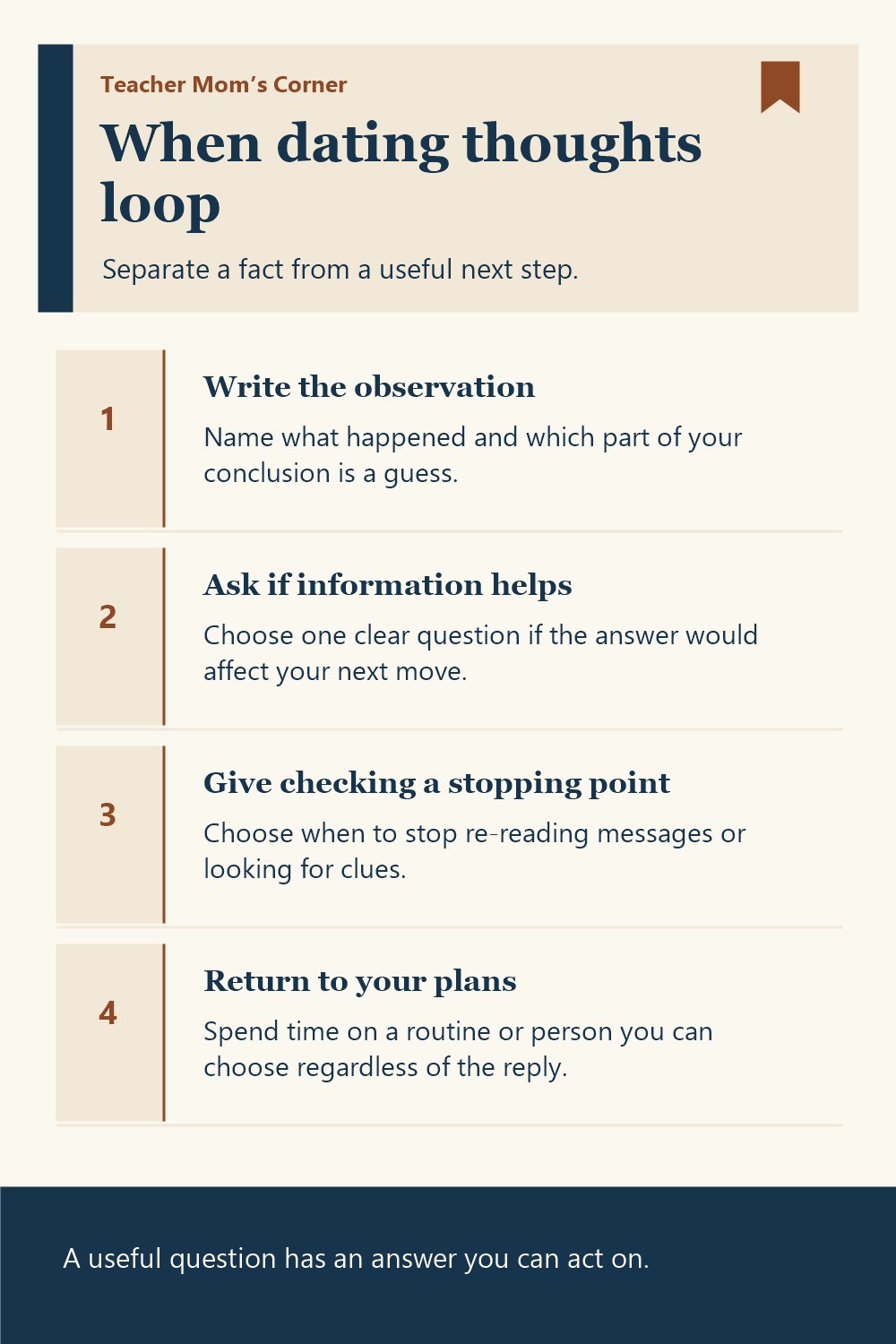
When dating thoughts loop
Separate a fact from a useful next step.
- Write the observation Name what happened and which part of your conclusion is a guess.
- Ask if information helps Choose one clear question if the answer would affect your next move.
- Give checking a stopping point Choose when to stop re-reading messages or looking for clues.
- Return to your plans Spend time on a routine or person you can choose regardless of the reply.
A useful question has an answer you can act on.