

If your partner rarely engages when you talk about feelings or plans, you may feel alone even when you spend time together. Start with the pattern you notice and the kind of response that would help you.
Some people need time before sharing something personal. You can respect their privacy and ask how they want to handle conversations that affect both of you.
On this page

Describe what happens
Think of a recent conversation you tried to have. Did they ask to talk later and come back to it? Did the subject repeatedly change? One busy evening and a recurring pattern may call for different responses.
Ask for one thing you can both try
Try “When plans change, I’d like us to say how we’re feeling instead of ending the conversation. Could we talk for ten minutes tonight?” Give them a chance to suggest a time or way of talking that works.
Respect privacy and discuss shared needs
They can decide what to tell you about their past. You can still talk about what you each want now, how you make decisions and what kind of support you can offer.
Check for effort over time
See whether they follow through, ask about your experience and make their own suggestions. If their words and actions differ, describe one example and decide what you need.
Choose how long you want to wait
You can take time to see if a new habit helps. If you keep doing all the work or feel unsafe bringing up your needs, consider independent support and the amount of contact that suits you.
Read the infographic in text
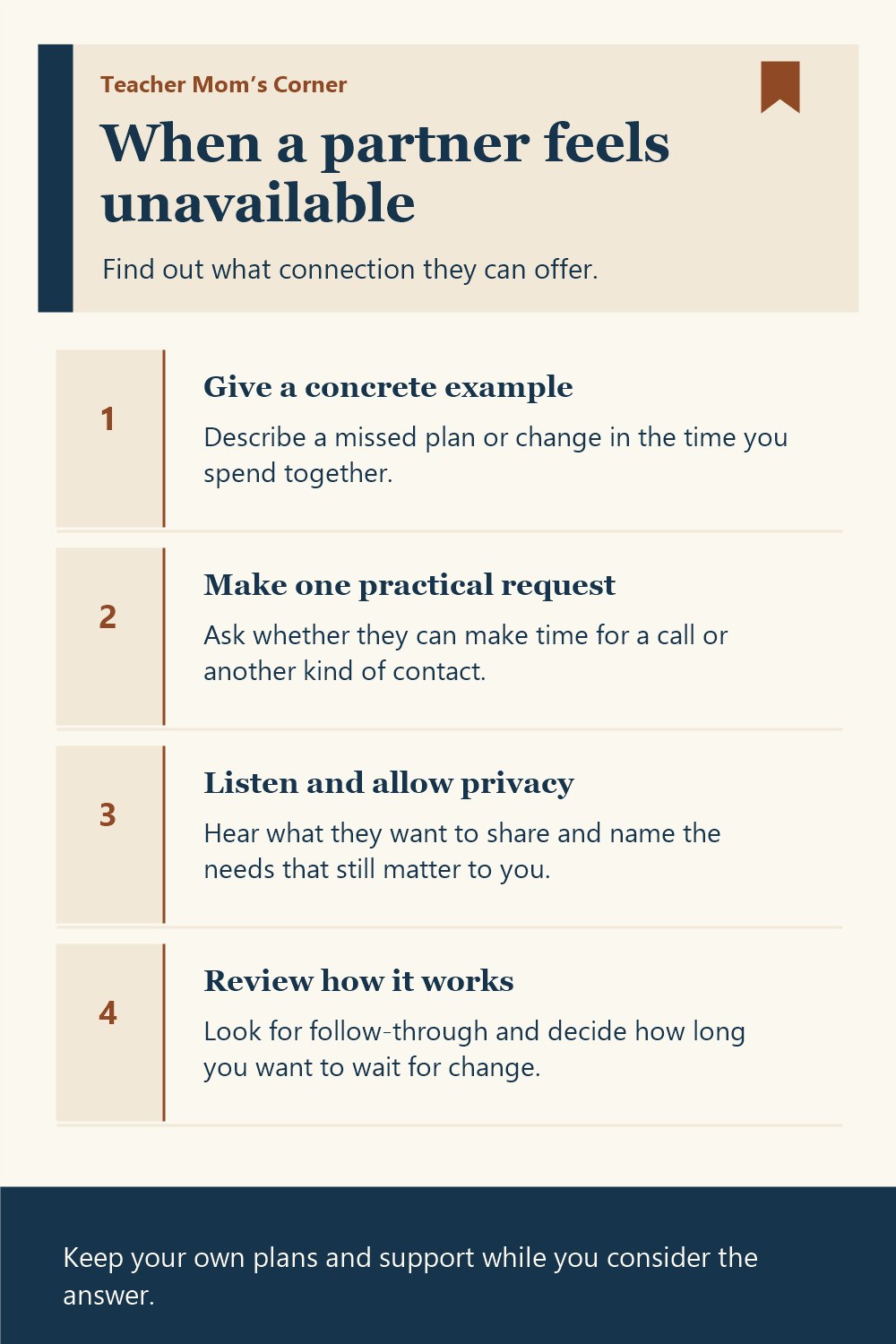
When a partner feels unavailable
Find out what connection they can offer.
- Give a concrete example Describe a missed plan or change in the time you spend together.
- Make one practical request Ask whether they can make time for a call or another kind of contact.
- Listen and allow privacy Hear what they want to share and name the needs that still matter to you.
- Review how it works Look for follow-through and decide how long you want to wait for change.
Keep your own plans and support while you consider the answer.