

What makes a partner appealing to you may include kindness, humour, attraction, reliability or shared interests. There is no single ranking that tells you whom to date. A more useful question is how a quality shows up in real life and whether the relationship fits what you want.
You can enjoy someone’s company without knowing yet whether your lives work well together. Take time to notice behaviour, discuss practical differences and decide which preferences are flexible and which needs matter most to you.
On this page

Translate appealing traits into behaviour
Words such as “honest” and “kind” are a starting point. Ask what you would actually notice. Honesty might include being clear about relationship status or acknowledging a mistake. Kindness might include responding respectfully when you decline an invitation.
Look at a range of ordinary situations rather than treating one gesture as a complete character assessment. How does the person handle a changed plan, a difference of opinion or a request they cannot meet? Can you ask a question without being mocked?
Keep your list short enough to use. You might choose three priorities, with an example of each. A wish for someone who enjoys the same films is different from a need for someone who respects your refusal. You can be flexible about tastes without negotiating away a personal limit.
Use shared interests to get acquainted
Food, music, books, sport or a love of animals can offer an easy starting point for conversation. Ask what the interest means to the person. Someone who enjoys cooking may love experimenting at weekends but prefer a quick meal after work.
If you both want a date based on an interest, discuss the cost, location and time involved. A simple meal or a short visit to a public event may suit you better than an elaborate plan. Choose something you can comfortably leave or change if it does not work for you.
A shared hobby can be enjoyable without predicting long-term compatibility. Owning a pet does not by itself establish that someone will be a considerate partner. Notice how they behave and what they actually want from dating.
Leave room for different tastes
You do not need identical playlists or the same favourite way to spend every evening. Consider whether you can show interest in each other while keeping some activities separate. A difference becomes a practical question when it affects shared time, money, space or responsibilities.
For example, one person may enjoy late concerts while the other needs an early night before work or school pickup. The conversation can be about timing and choice rather than which person is more fun.
Respect also matters when an interest is meaningful to only one of you. You can be curious about a partner’s beliefs or traditions without adopting them, and ask for the same consideration in return. Neither person needs to make fun of the other to express a different view.
Discuss the shape of everyday life
A job title or salary does not tell you whether someone will be reliable, affectionate or fair. More useful questions concern work hours, availability, financial expectations and the kind of relationship each person wants.
If you have children, think about how dating fits existing responsibilities. Discuss your availability without feeling obliged to apologise for it. Introductions, caregiving and the pace of involvement need thoughtful decisions; a partner’s enthusiasm does not settle those questions on its own.
Pets, travel, living arrangements and wishes about children may also affect compatibility. Ask about the subjects relevant to your life at a pace that feels appropriate. Love is respect’s explanation of boundaries and expectations can help you separate a private assumption from something you have actually agreed.
Describe yourself honestly when dating
A profile can offer a few accurate details rather than a performance of what you think everybody wants. Mention an interest you actually enjoy and, if you wish, what kind of connection you are seeking. You do not have to exaggerate cooking skills, career success or a passion for someone else’s hobbies.
Keep private information private. You can say that family life matters without publishing children’s identifying details or a precise routine. Share more as you get to know someone and feel comfortable doing so.
As you date, review how it feels to spend time together and whether actions match the relationship on offer. You are also making a choice, not simply trying to be chosen. An appealing trait is useful information; mutual interest, respectful behaviour and a workable fit take time to explore.
Read the infographic in text
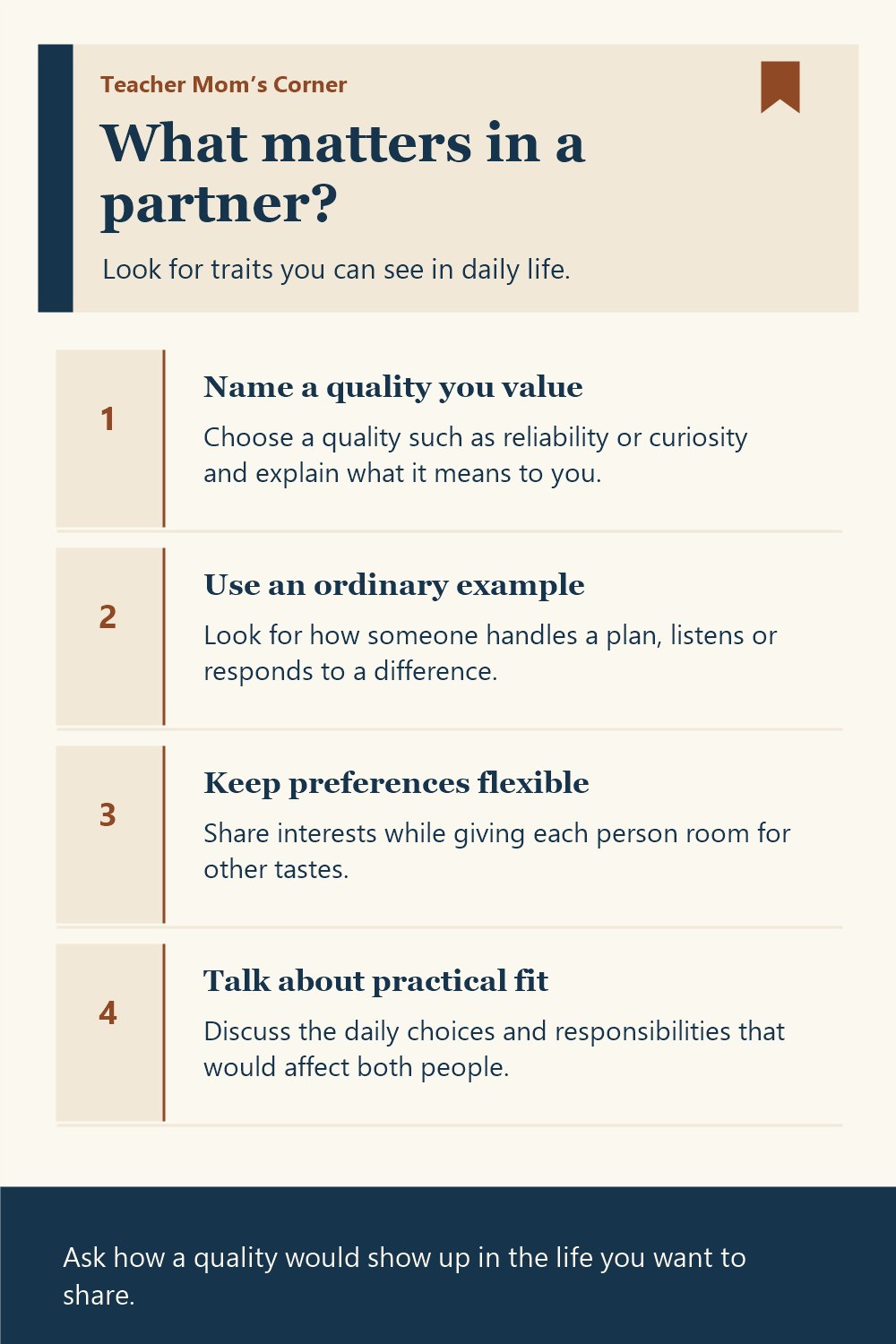
What matters in a partner?
Look for traits you can see in daily life.
- Name a quality you value Choose a quality such as reliability or curiosity and explain what it means to you.
- Use an ordinary example Look for how someone handles a plan, listens or responds to a difference.
- Keep preferences flexible Share interests while giving each person room for other tastes.
- Talk about practical fit Discuss the daily choices and responsibilities that would affect both people.
Ask how a quality would show up in the life you want to share.