

A break from dating can make room for rest, friendships, family life or simply fewer demands on your attention. You do not need to be exhausted, disappointed or recently separated to choose one. Wanting a pause is enough.
Taking a break from dating is different from giving up on care, connection or love. You may want a relationship later, remain unsure or prefer being single. The possibilities below are invitations to consider what would help you, rather than requirements to improve yourself before someone can love you.
On this page

1. Choose what to pause
Be specific about what you want less of: swiping, arranging first dates, talking about relationships or keeping up several conversations. You can pause one activity without withdrawing from everything you enjoy.
If you already have plans or are dating someone, communicate the change where it is safe and appropriate. A clear message such as “I am stepping back from dating and will not be arranging another date” leaves less uncertainty than disappearing. You do not owe a detailed personal explanation.
2. Make room in your week
Look at the time and energy dating currently uses. What would you like to do with some of it? Rest, an unhurried meal, a friendship or a task you keep postponing may matter more than a dramatic new project.
If you are a parent or carer, a pause does not automatically create free time. Consider practical support with an existing responsibility. You are allowed to want both companionship and a less crowded week.
3. Keep your limits
You can use the pause to notice which limits matter to you: how quickly you meet, what you disclose, how much messaging feels comfortable or what behaviour you will not accept. These are choices you can carry into future dating.
Caution does not make you unlovable, and you do not have to ignore a concern to give someone a chance. Trust can develop through consistent behaviour over time. It is also reasonable to decide that you do not want another date.
4. Allow mixed feelings
You may feel relieved by a quiet evening and lonely later. A friend’s relationship milestone may bring happiness for them alongside sadness about something you want. Neither feeling means you have chosen the wrong path.
Try naming the particular need: company, affection, reassurance or time away from relationship talk. You can ask for support without deciding that every couple is secretly unhappy or that being single is a personal failure.
5. Keep connection in your life
Dating is one way to meet people, but it need not be your only source of connection. You might arrange a regular call, spend time with someone you trust or try an activity that interests you.
Choose something that fits your capacity and ask about the other person’s availability. The NHS guidance on relationships and wellbeing includes boundaries, time for your interests and support outside a romantic relationship. You can build connection without being constantly available.
6. Enjoy your own routines
Being single does not mean being selfish or having no one else to consider. Work, children, relatives, friends and shared housing may already involve plenty of negotiation. Notice where you would welcome more choice within your actual circumstances.
You might change a morning routine, return to a hobby or keep an evening free of optional plans. You do not need to treat independence as a problem to correct before you can be a considerate partner.
7. Consider advice on your terms
Some advice may be helpful, and some may feel intrusive. You can listen, ask for a specific kind of help or decline the conversation. Someone caring about you does not make every suggestion right for your life.
A simple response might be, “I am taking a break from dating. I will ask if I want introductions.” If you do want advice, choose a question you would find useful rather than inviting a verdict on why you are single.
8. Choose what to share
You do not have to share your full history on an early date, with a friend or on a public profile. A pause can be a chance to think about what feels private and what you would eventually want a partner to understand.
Openness can grow at a pace you freely choose. If you have children, their names, routines and personal details deserve privacy too. Keeping information private is not automatically a sign that you are unable to connect.
9. Change your app routine
If dating apps are taking more attention than you want to give, consider turning off notifications, choosing limited times to check them or using the service’s pause option. Check what a setting does before assuming that hiding a profile, deleting an app and closing an account are the same thing.
You can choose a small change and review whether it helps. There is no need to find a perfect app or keep checking because you fear missing your only opportunity.
10. Take persistent distress seriously
Feeling nervous before a date does not by itself mean you are doing something wrong. You can decline, change the plan or choose a pace that feels manageable. A break is an option, rather than a test of whether you have the right attitude.
If distress persists, worsens or affects sleep, concentration or everyday activities, speak with a healthcare professional. The National Institute of Mental Health’s self-care guidance describes everyday support and reasons to seek professional help. You do not have to handle a difficult period alone.
11. Reconsider dating at your pace
If you become interested in dating again, ask what you want to try and what would make it workable. You might prefer fewer conversations, a short first meeting or clearer discussion of intentions. You do not need to feel completely confident before making an ordinary choice.
You also do not owe another date because someone seems suitable on paper. Interest needs room to be mutual. Respecting someone’s no, including your own, is part of dating with care.
12. Leave the future open
You can set a review date if that helps, but a break does not need a deadline. Ask whether your current arrangements are meeting your needs and whether you want anything to change. Remaining single is a valid choice, as is deciding you would like a relationship.
For now, choose one thing to pause and one thing you want more room for. Your worth and the possibility of a fulfilling life do not depend on whether, when or how you return to dating.
Read the infographic in text
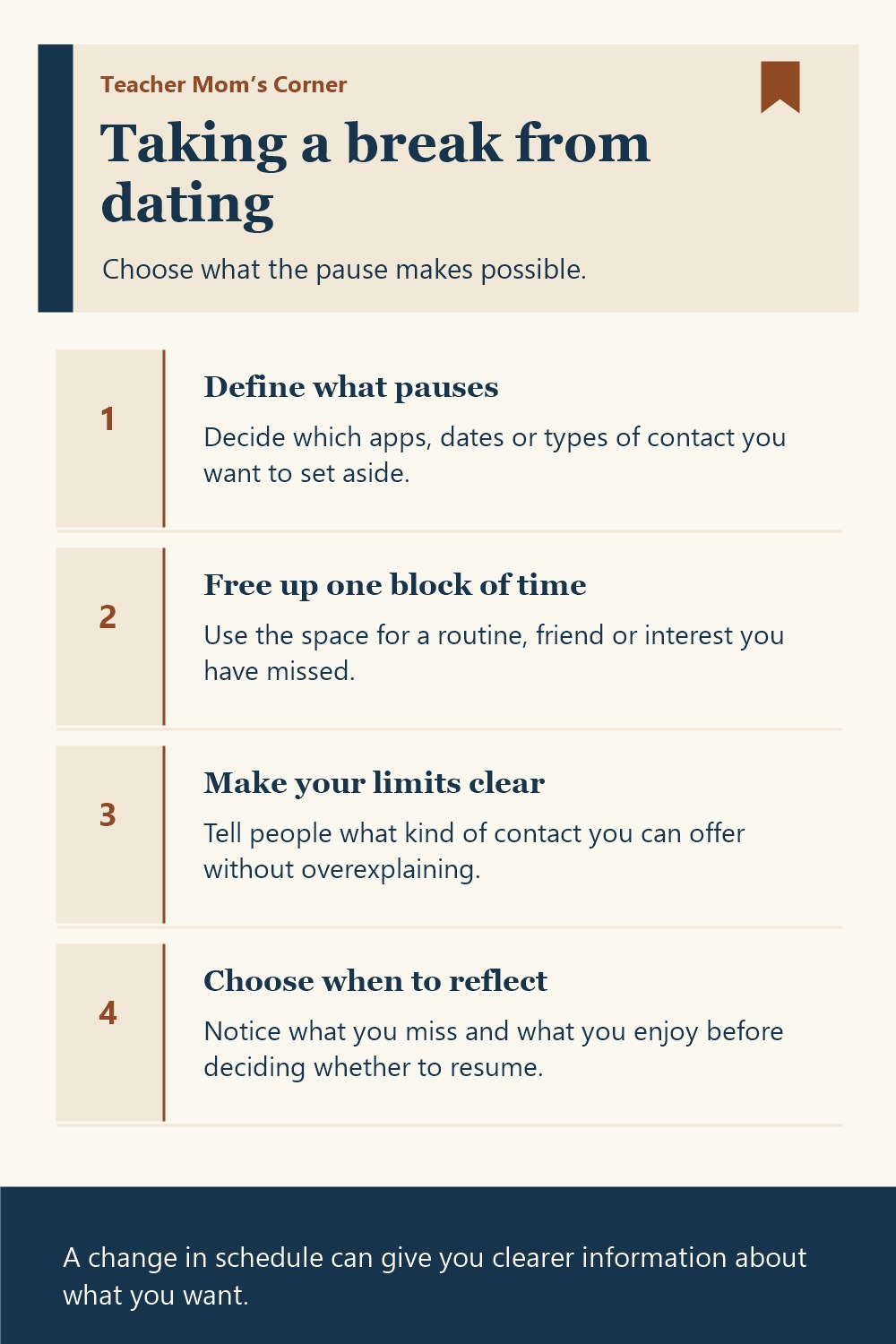
Taking a break from dating
Choose what the pause makes possible.
- Define what pauses Decide which apps, dates or types of contact you want to set aside.
- Free up one block of time Use the space for a routine, friend or interest you have missed.
- Make your limits clear Tell people what kind of contact you can offer without overexplaining.
- Choose when to reflect Notice what you miss and what you enjoy before deciding whether to resume.
A change in schedule can give you clearer information about what you want.