

A lasting relationship involves choices both people continue to make. You can practise clearer communication, share responsibilities and make time for affection, but no set of habits can guarantee that a couple will stay together. The aim is a relationship that remains respectful and workable for both of you.
For parents and people with demanding schedules, that work needs to fit real life. It may begin with a clearer school-morning plan, a short conversation after a difficult day or a change to how you divide household tasks. Start with one recurring situation rather than trying to improve everything at once.
On this page

Share the work and name what you need
Appreciation can matter, but it does not replace a fair arrangement. If one person notices every appointment, packs every bag or repeatedly handles the evening routine, begin by making that work visible. Ask who plans the task, who does it and who checks that it is finished.
Describe a specific request: “Could you take responsibility for the school lunches on Tuesdays and Thursdays, including checking what we need?” This is clearer than hoping your partner will notice that you are tired. They may have a different suggestion; the conversation should leave room to decide together.
Make the arrangement realistic for the current week. Illness, work changes and caring responsibilities can affect what each person can do. An unequal week is different from a pattern in which one person’s time is always treated as available. Agree when you will check how the arrangement is working.
Notice useful effort without pretending that a problem has disappeared. You can say, “That made this morning easier,” and still discuss another task that needs attention. Showing Your Partner You Care: Small Actions and Shared Effort offers more ideas for everyday care.
Choose affection that both people want
Affection can include a hug, a message, shared humour or practical help. Ask what feels welcome rather than assuming that a particular gesture is always wanted. Being partners does not remove either person’s choice about touching, kissing or sex.
One person may want closeness when tired while the other wants quiet. Try asking, “Would a hug help, or would you rather have some space?” A declined gesture does not have to become an argument about whether the relationship matters. You can discuss a broader concern about closeness at a separate, workable time.
Physical affection cannot guarantee faithfulness or make one person responsible for preventing another person’s choices. If you have an agreement about exclusivity, discuss what it means and take responsibility for your own behaviour. Avoid turning affection into a duty performed to keep a partner from leaving.
The relationship resource love is respect discusses personal boundaries, including physical affection, privacy and time with friends. You can remain close while keeping limits of your own.
Make realistic time for connection and rest
Time together does not need to meet a fixed daily quota. Ask what kind of contact each of you is missing, then consider what can fit. Ten minutes of attention after the children are settled may be more workable than a nightly conversation neither person has energy for.
Choose an arrangement that is specific enough to try: a short walk, an evening meal without checking phones or a planned conversation about the weekend. If a plan falls through, discuss another opportunity rather than treating the missed moment as a test of love.
Leave room for rest, friendships and separate interests as well. Looking after yourself is not a requirement to appear more attractive or stay cheerful for a partner. You can say you need a break and discuss how essential responsibilities will be covered while you take it.
Handle disagreement with respect and follow-through
You can raise a concern without insulting the other person, and you can listen without agreeing with every interpretation. Focus on the behaviour or decision you want to address: “We agreed on a collection time, and it changed without a message. How can we handle that next time?”
Choose a time when you can both participate. If someone needs a pause, agree how you will return to the issue rather than leaving it indefinitely. The NHS guide to healthy relationships suggests taking time out when an issue is difficult to discuss calmly and returning when people feel calmer.
Check your understanding before preparing your reply: “Are you saying that the last-minute changes leave you doing all the rearranging?” Then share your own view. Understanding a feeling does not require accepting blame for something you did not do or remaining in a threatening conversation.
End with a next action where possible. An apology and a promise are easier to assess when you know what will change and when you will review it. If the same issue keeps returning, consider independent support or a qualified relationship professional. If speaking honestly could lead to intimidation or retaliation, seek individual specialist support first.
For now, choose one agreement to clarify and one question to ask your partner. A relationship’s future depends on both people’s choices; you do not have to carry the whole responsibility for making it last.
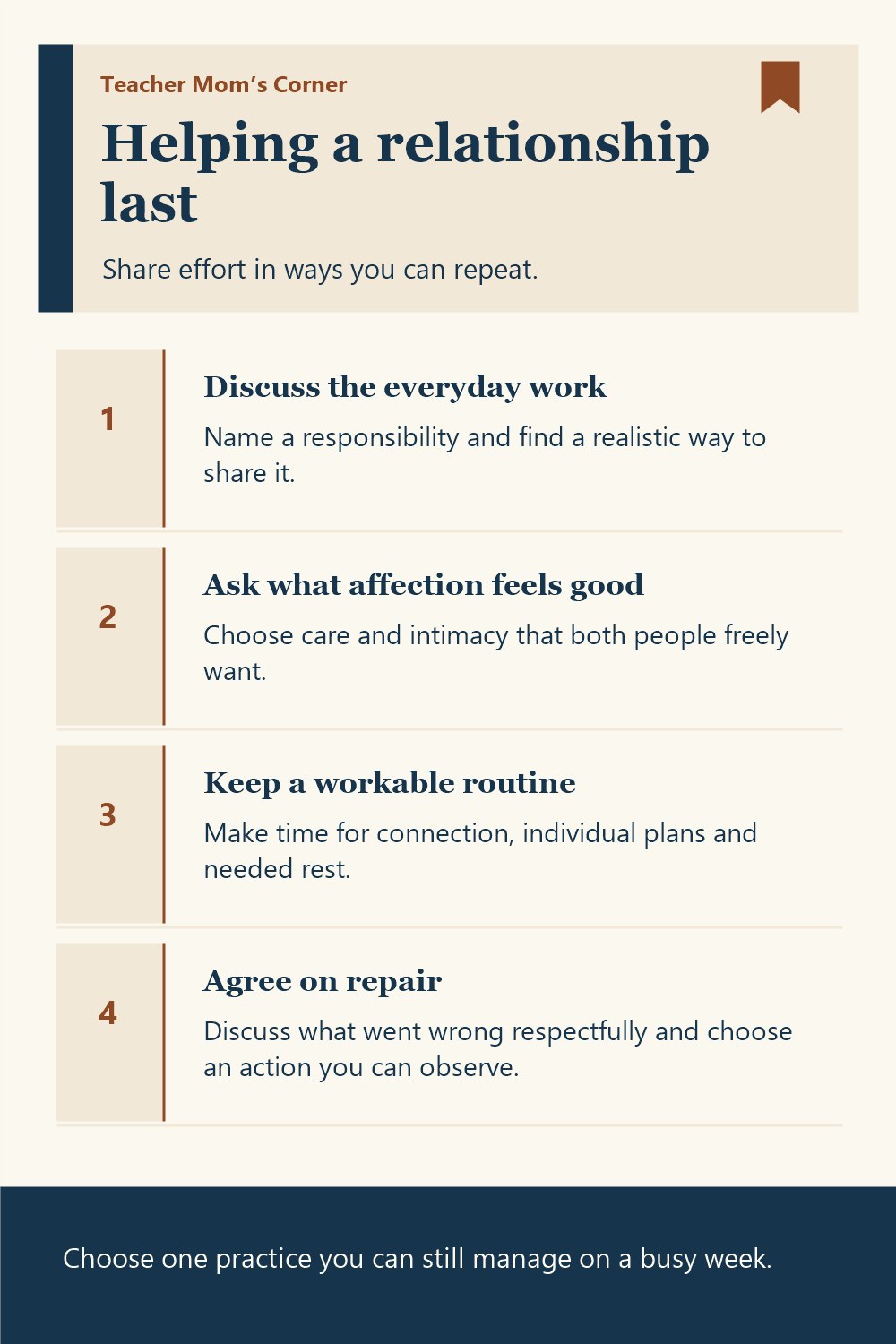
Read the infographic in text
Helping a relationship last
Share effort in ways you can repeat.
- Discuss the everyday work Name a responsibility and find a realistic way to share it.
- Ask what affection feels good Choose care and intimacy that both people freely want.
- Keep a workable routine Make time for connection, individual plans and needed rest.
- Agree on repair Discuss what went wrong respectfully and choose an action you can observe.
Choose one practice you can still manage on a busy week.