

Intense attention can feel exciting, confusing or both. Frequent messages, big gifts and early promises are worth considering in the context of the whole relationship: can you slow things down, say no and keep your own life without being punished?
You do not need to decide whether a person is a “narcissist” to take unwanted pressure seriously. A label cannot tell you their intentions or predict every response. Start with the behaviour you can describe and what you need to feel respected.
On this page

1. Look at the pattern
The National Domestic Violence Hotline’s guide to love bombing describes overwhelming attention, gifts and romantic claims that may be used to influence a partner. One compliment does not establish manipulation. Pay attention to whether attention comes with pressure, obligation or repeated disregard for your limits.
Compare an affectionate message with a demand for immediate access: “I enjoyed seeing you; reply when you can” leaves a choice. Repeated calls followed by accusations because you were busy do not. You can dislike that pressure even if the person says they meant well.
Help should also leave you with choices. Someone offering a lift or help with a task does not become entitled to your time, money, passwords or commitment. You can accept useful help and still decline something else.
2. Choose your own pace
You can enjoy a connection without moving quickly into exclusivity, shared finances or living together. If it feels safe, state a concrete preference: “I want to keep seeing my friends on Fridays” or “I am not ready to make that commitment.”
You do not need to praise someone above other people to keep their affection. A respectful partner can hear that you care about family and friends too. Keeping those connections gives you companionship and outside perspective.
Personal questions should leave room for privacy. You can say, “I do not want to discuss that yet.” Early disclosure about past hurt is not a requirement for proving trust, and information you share should not later be used to embarrass or threaten you.
Look at the response over time. Listening, accepting a no and adjusting behaviour are different from repeatedly arguing until you give in. You do not have to set a test or confront someone if doing so feels unsafe.
3. Keep gifts and affection freely given
A gift does not create a debt of sex, access or forgiveness. You can decline presents that feel too expensive or too personal. If a previous gift is used to demand compliance, the issue is the demand, not whether you were grateful enough.
Affection should also allow you to say no or ask for space. A warm evening cannot erase pressure you experienced earlier. You can acknowledge both experiences without deciding that one proves the other was unreal.
If attention suddenly becomes distant, ask for clarity if that feels appropriate and safe. Avoid chasing reassurance by giving up your limits. The other person is responsible for communicating their wishes, and you can decide whether the relationship works for you.
4. Notice treatment over time
Consider how the person responds to ordinary frustration, disagreement and other people’s boundaries. Repeated humiliation, threats, monitoring or isolation deserve attention. You do not need to wait for every warning sign on a list.
If someone close to you raises a concern, ask for specific examples. “They looked through your messages after you said no” gives you more to consider than a personality label. You can hear their concern without allowing them to make every decision for you.
A private factual note may help you remember a confusing pattern, but keep it only if it is safe to do so. Avoid accessing private accounts, provoking a reaction or collecting evidence in ways that could put you at risk.
5. Seek support without proving a label
Feeling uneasy is enough reason to pause and seek perspective. It does not prove you know someone’s intentions, and you do not need that proof before protecting your time or asking for help.
If you fear retaliation or feel controlled, consider speaking with a domestic abuse advocate about your circumstances. The Hotline’s personal safety planning resource can help you think through options. In the United States, call 800-799-7233 or text START to 88788. Use a safer device if your communications may be monitored; contact local emergency services for immediate danger.
For further reflection, read Before Confronting a Partner You Think Is Narcissistic or Getting Over Someone: Rejection, Breakups and Your Next Steps. Your next step can be small, private and chosen with support.
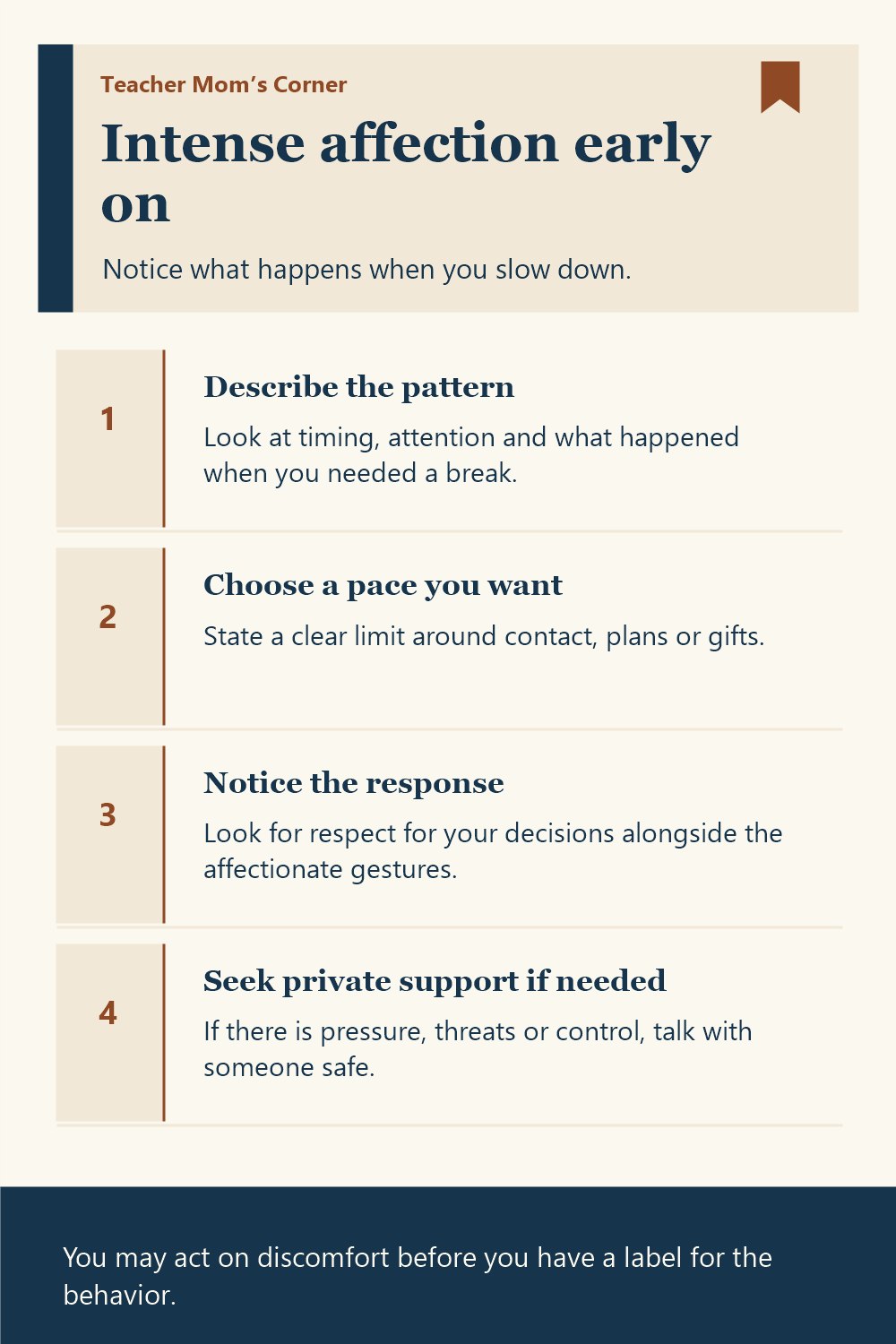
Read the infographic in text
Intense affection early on
Notice what happens when you slow down.
- Describe the pattern Look at timing, attention and what happened when you needed a break.
- Choose a pace you want State a clear limit around contact, plans or gifts.
- Notice the response Look for respect for your decisions alongside the affectionate gestures.
- Seek private support if needed If there is pressure, threats or control, talk with someone safe.
You may act on discomfort before you have a label for the behavior.