

You can still feel affection for someone after deciding that the relationship has to end. Feelings often change unevenly. You can choose how much contact to have, what to do with reminders and who to ask for support while you adjust.
On this page

Keep a short record of why you ended it
Write down a few concrete reasons in words you’ll recognize later. Perhaps you wanted different futures, or promises repeatedly went unkept. Include something you’ll miss as well. That gives you a fuller picture when one good memory takes over.
Decide what contact is workable
If you have no shared obligations, you can take a break from calls, messages and checking their social profiles. When you share childcare, bills or a workplace, set limits around the channel, timing and topics. For example, “Please email me about school pickup and expenses. I’ll check once each afternoon.”
Give reminders a place
Put photos, letters and objects somewhere you can choose to revisit later. You can ask a friend to hold a box for a few weeks if you keep reopening it. For a shared album or calendar, save the files you need and check what will happen to the other person’s access before changing settings.
Plan for a time that feels empty
If Sunday evenings used to be your time together, arrange a walk, call or simple meal. Choose something you can do on a low-energy day. When you want to text, write down what you want from the exchange. For comfort or company, try contacting someone who can give you that without reopening the relationship.
Adjust after a hard day
A birthday, an unexpected encounter or hearing their news can bring the feelings back. Review what made that day hard and what could help next time. If grief keeps disrupting everyday life, a counselor or another source of ongoing support may be worth considering.
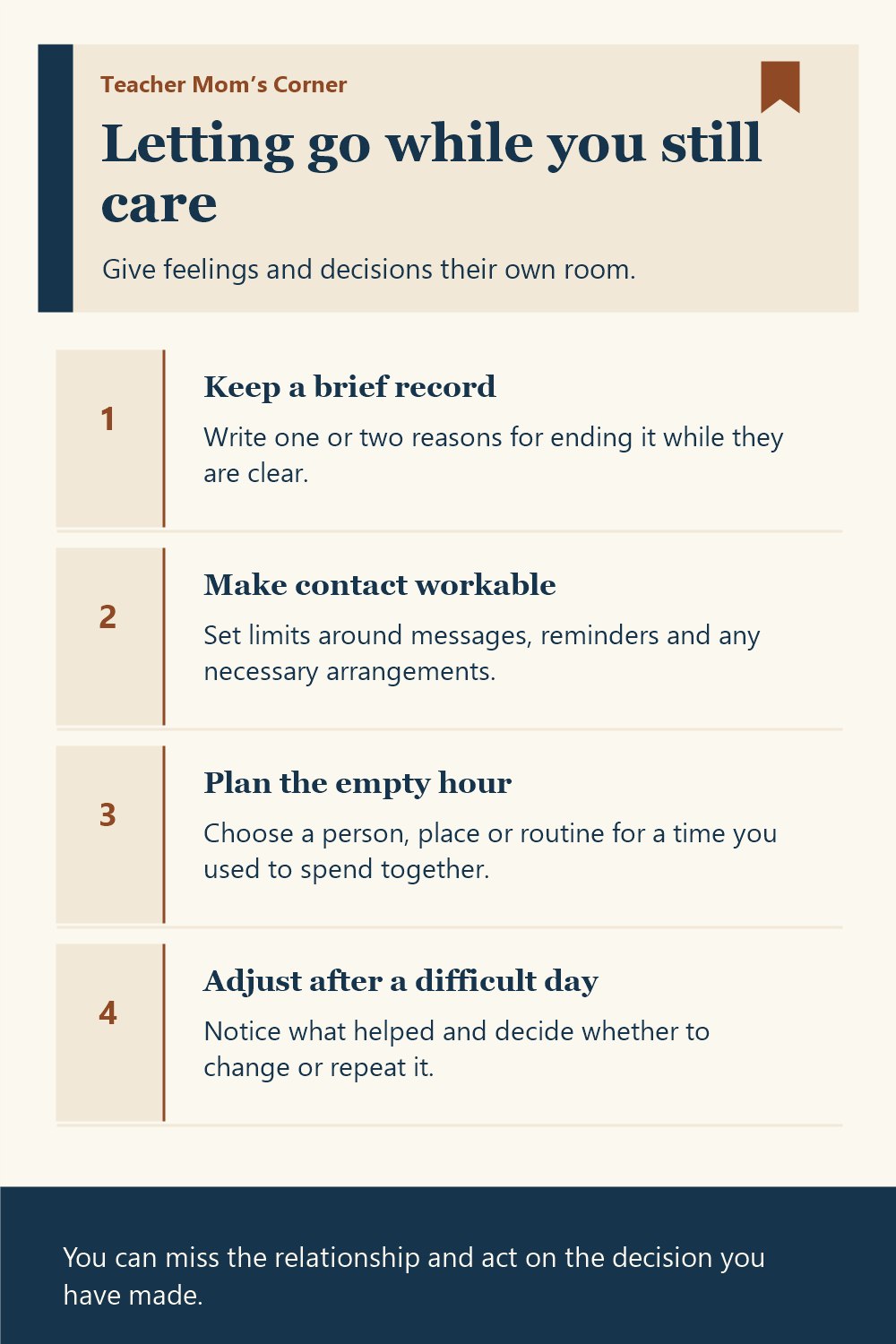
Read the infographic in text
Letting go while you still care
Give feelings and decisions their own room.
- Keep a brief record Write one or two reasons for ending it while they are clear.
- Make contact workable Set limits around messages, reminders and any necessary arrangements.
- Plan the empty hour Choose a person, place or routine for a time you used to spend together.
- Adjust after a difficult day Notice what helped and decide whether to change or repeat it.
You can miss the relationship and act on the decision you have made.