

Someone may be affectionate in person, send frequent messages for a while and then become hard to reach. That change can leave you unsure where you stand, particularly when plans or relationship expectations have not been discussed.
You cannot reliably identify the reason from response times alone. You can describe the pattern, ask a direct question and decide whether the contact available works for you. You do not have to become perfectly calm or endlessly patient to deserve a clear conversation.
In this article

Describe the change without guessing its cause
Start with what you can observe. “We arranged two visits that were cancelled without another date” is clearer than “They are playing hot and cold.” It identifies the part of the situation that affects you.
Different explanations may be possible, including changing interest, different communication preferences or demands you do not know about. A possible explanation is not a fact about this person. Avoid deciding that they are afraid of love, secretly testing you or certain to leave.
A delayed reply does not by itself prove a mind game. Equally, having a busy life does not make every pattern workable. You can take the impact on you seriously without first proving an intention to hurt you.
Consider the practical context you actually know. Someone’s shifts, care duties or limited phone access may affect availability. Ask rather than expecting them to be constantly reachable or assuming you are unimportant.
Ask what you need to know
Try a specific question: “I enjoy seeing you, but our plans have become uncertain. Do you want to keep dating, and what time can you realistically make for it?” That invites an answer about the relationship now.
If you need to discuss a particular cancellation or silence, describe it without building a list of accusations. “I did not know whether to keep Saturday free” explains the practical problem more clearly than a test of whether they would make time if they cared.
If exclusivity matters, ask about it directly. Frequent texting or affectionate dates do not establish whether either person is dating someone else. Discuss the agreement rather than checking a phone, monitoring accounts or using a friend to investigate.
You can feel upset and still ask respectfully. If you want a pause before speaking, take one where possible, but your concern does not become invalid because you sound nervous or disappointed.
Agree on a realistic pattern of contact
Early messaging can change as people get to know each other. There is no required number of daily texts. What matters is whether you can discuss expectations and make arrangements that both people freely accept.
A slower pace can be clear: fewer dates, more notice or time to decide about exclusivity. “Taking it slowly” does not have to mean leaving every plan and question unanswered.
You might agree to confirm a date by a particular day, give notice when plans change or explain when a longer gap in contact is likely. Keep the agreement modest enough to be realistic rather than demanding constant reassurance.
If you cannot find an arrangement that suits both of you, that is useful information about compatibility. It does not establish that one person is too needy or the other is incapable of caring.
Notice whether words and behaviour fit
After discussing the issue, look at what happens over time. Are plans clearer? Can you raise a concern without being mocked? Does each person communicate a change rather than assuming the other will wait?
Warmth after a difficult gap does not erase insults, intimidation or pressure. If those behaviours are present, address them as concerns in their own right. You do not need to explain them away as a normal phase of dating.
Love Bombing or Affection? Pace, Boundaries and Patterns of Behaviour offers related questions without diagnosing a partner. Consider specific actions and how freely you can make choices.
If someone says they do not want to continue, take that answer seriously. An affectionate message later does not automatically create a new agreement. You can ask for clarity or decide that renewed contact is not right for you.
Choose your limits and next step
Keep time for other people, responsibilities and activities where you can. This is not about distracting yourself until someone returns. Your life does not need to stay on hold around uncertain plans.
A limit might be, “If a plan is not confirmed, I will make other arrangements,” or “I am looking for more reliable contact, so I am ending this dating arrangement.” You can explain your decision without threatening someone into changing.
When Your Relationship Feels Stuck: Choices and Next Steps considers options when a pattern continues. You can also seek support from someone you trust while deciding what you want.
If you are afraid of a person’s reaction, prioritise a safer way to reduce contact or leave, with support where available. Otherwise, focus on an honest request, the response you receive and the arrangement you are willing to choose.
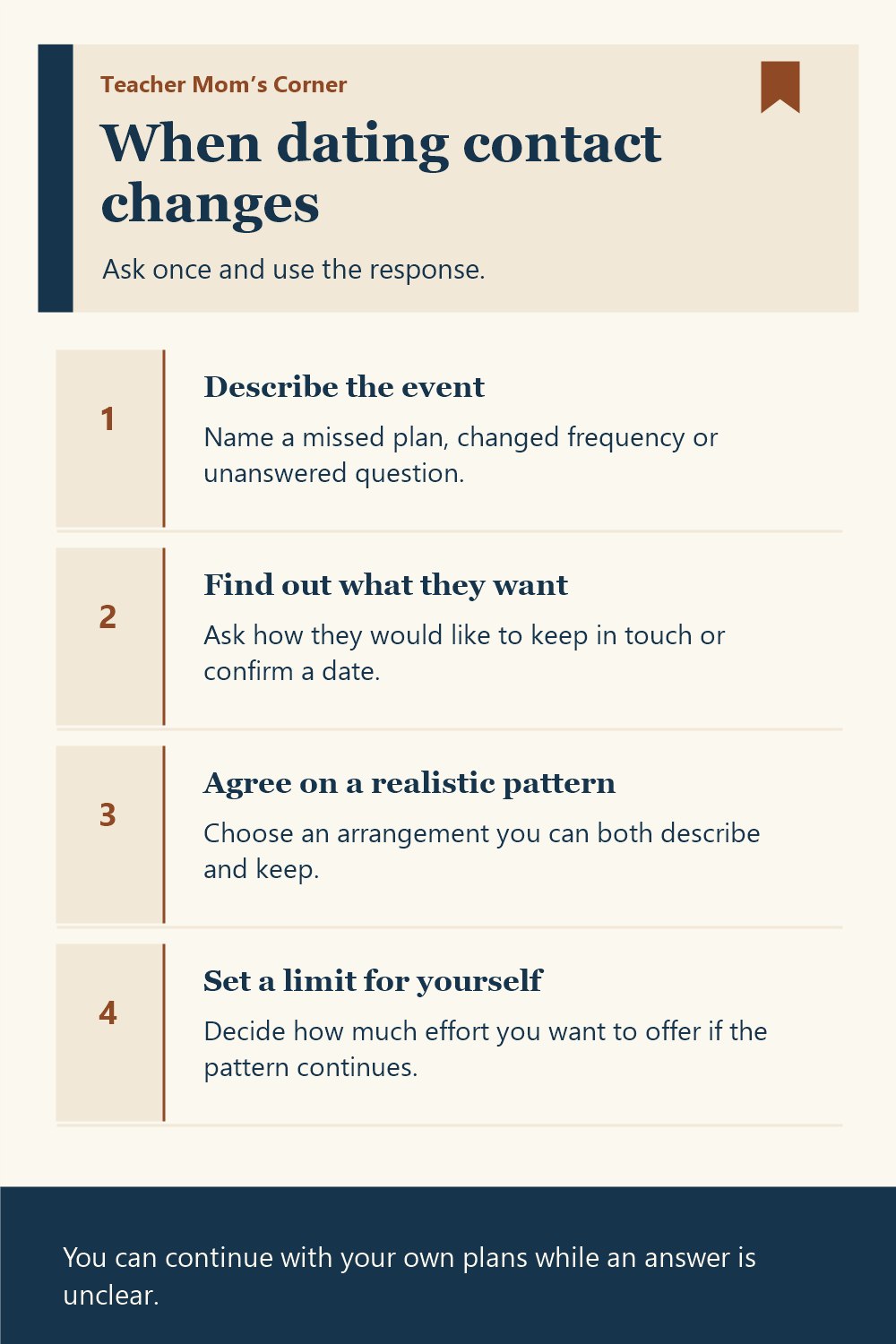
Read the infographic in text
When dating contact changes
Ask once and use the response.
- Describe the event Name a missed plan, changed frequency or unanswered question.
- Find out what they want Ask how they would like to keep in touch or confirm a date.
- Agree on a realistic pattern Choose an arrangement you can both describe and keep.
- Set a limit for yourself Decide how much effort you want to offer if the pattern continues.
You can continue with your own plans while an answer is unclear.