

Missing someone after a breakup or an unreturned crush can make ordinary days feel difficult. You may miss the person, the routine or the future you imagined. You do not have to dismiss those feelings to recognise that a relationship is unavailable or has ended.
Getting over someone is not a competition to feel nothing first. Focus on respecting the situation, caring for daily life and choosing support that helps you through the next part.
On this page

1. Start with the answer you have
If someone has ended the relationship or declined your interest, take that answer seriously. You do not need a final conversation that makes every detail clear before you can begin making plans for yourself.
Missing them does not establish that you belong together, and a strong connection does not create a duty for either person to continue. Avoid treating rejection as a challenge to become more persuasive or prove that they will regret it.
If the situation is genuinely unclear and contact is welcome, you can ask one direct question. Then allow the response, including a request for space, to guide your next step. Repeated requests for another answer can become unwanted pressure.
2. Make contact more manageable
Consider what contact is necessary and what is keeping the hurt constantly in view. Muting updates, putting away photographs for a while or asking friends not to relay news may give you breathing room. You can choose privacy without posting an announcement about the breakup.
If you share children, work or practical responsibilities, complete silence may not be possible. Consider a clear channel for essential arrangements and keep messages focused on the task. Avoid asking children or mutual friends to carry personal messages.
Do not use dates, social posts or messages about other admirers to provoke jealousy. Someone new deserves to be treated as a person, and an ex does not need updates designed to change their feelings.
3. Care for the ordinary day
Choose a few basics you can manage: a meal, a regular bedtime, a short walk if it suits you or help with an essential task. You do not need an expensive trip, a shopping spree or a busy social calendar to take care of yourself.
Ask a friend for something specific. “Could we have dinner without analysing their latest post?” or “Can you keep me company this afternoon?” gives them a way to help. You can also say when advice or insults about the other person are making things harder.
The NHS guide to grief and loss recognises that the end of a relationship can bring grief and suggests small, manageable steps and support. You do not have to follow a fixed sequence of emotions.
4. Look back without judging your worth
When you feel ready, consider what worked, what hurt and what you would want differently. You can recognise a mismatch without deciding the other person was entirely bad or that you were not enough.
If you made a mistake, think about an appropriate repair or what you would change in a future relationship. You do not have to contact someone who has asked for no contact to demonstrate that you have learned something.
You are not responsible for another person’s abuse or coercion. If the relationship involved fear, threats or control, seek individual support about safety and contact. The guide to Love Bombing or Affection? Pace, Boundaries and Patterns of Behaviour offers related questions about treatment and choice.
5. Move forward at your own pace
You can enjoy something and still feel sad later. You can feel relief without being cruel. Neither reaction requires a particular recovery deadline, and you do not need to be happy about someone else’s new relationship.
Date again only if you want to, with honesty about what you can offer. Friendship, rest and interests outside dating also count as meaningful parts of life. For further reflection, see Keeping Your Sense of Self in a Relationship: Time, Choice and Boundaries.
If distress persists, disrupts sleep or daily responsibilities, or feels difficult to manage, talk with a qualified mental health professional. Seek urgent local support if you feel unable to keep yourself safe. You can ask for help before you know exactly what you need.
Read the infographic in text
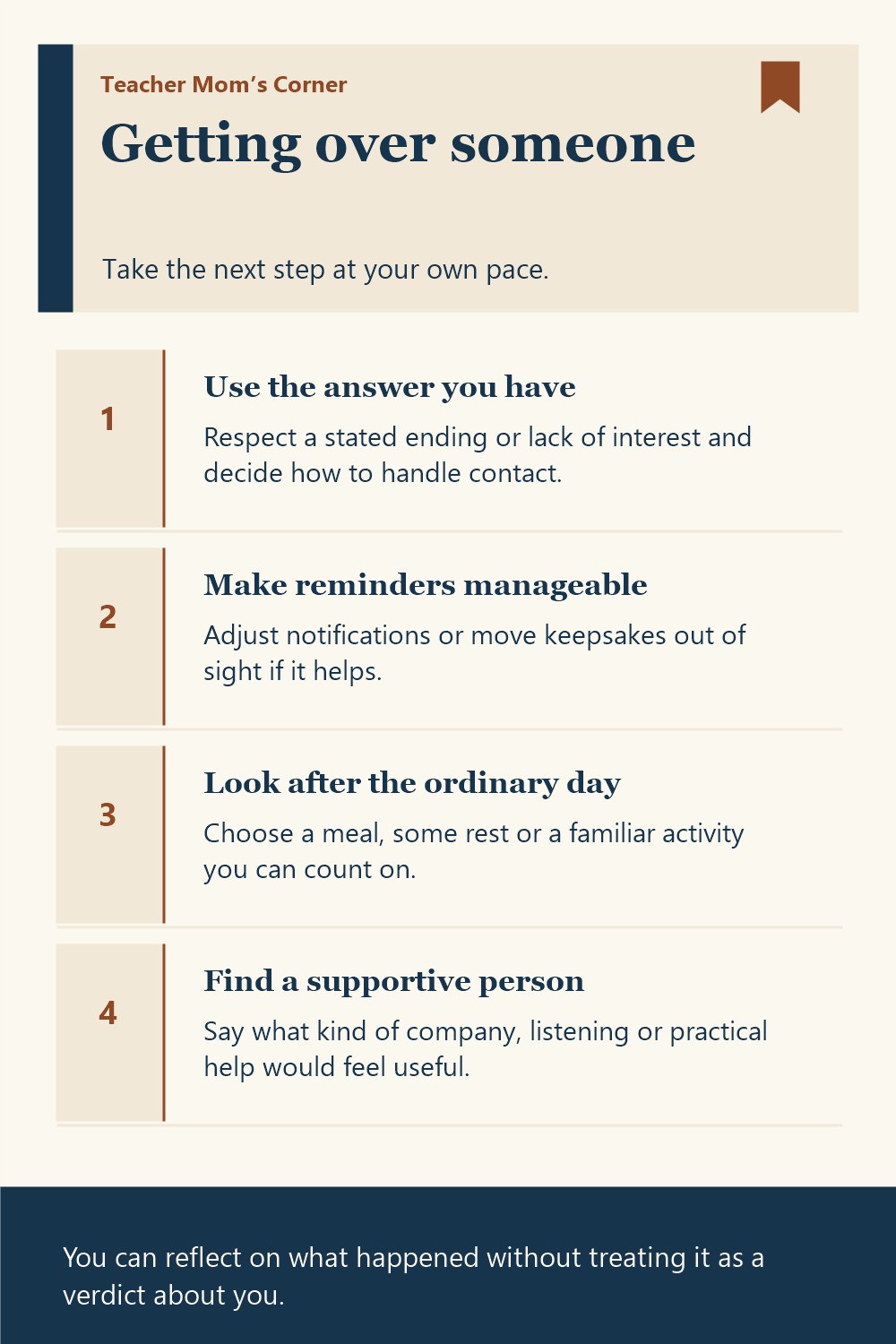
Getting over someone
Take the next step at your own pace.
- Use the answer you have Respect a stated ending or lack of interest and decide how to handle contact.
- Make reminders manageable Adjust notifications or move keepsakes out of sight if it helps.
- Look after the ordinary day Choose a meal, some rest or a familiar activity you can count on.
- Find a supportive person Say what kind of company, listening or practical help would feel useful.
You can reflect on what happened without treating it as a verdict about you.