

You may stay after learning about infidelity while you think, make practical plans or decide whether trust can be rebuilt. You can set boundaries during that time and revisit the decision as you get more information.
On this page
Get support and room to think
Choose a trusted person who can listen without insisting on a decision. If home, money or childcare makes it difficult to think about your options, name the practical question that needs attention first. A private conversation with a counselor or support service can give you a place to sort through those questions.

Ask for the facts you need now
Start with what affects your decisions. Is there ongoing contact? Were any agreements about sexual health or shared money broken? You can pause the conversation when you have enough for the moment and return to a question later.
Take care of your sexual health and set your own pace
If you’re concerned about possible exposure to a sexually transmitted infection, talk with a healthcare professional about which tests and timing fit your situation. You can pause sexual contact while you decide what feels comfortable. The CDC’s guide to STI testing explains how to find testing and speak with a clinician.
Look for follow-through you can see
If you want to explore repair, ask what your partner will change and agree on how to discuss concerns. Look for honest answers, respect for your pace and consistent behavior over time. If you fear retaliation, threats or coercion, seek confidential support and consider your safety before arranging a joint conversation.
Read the infographic in text
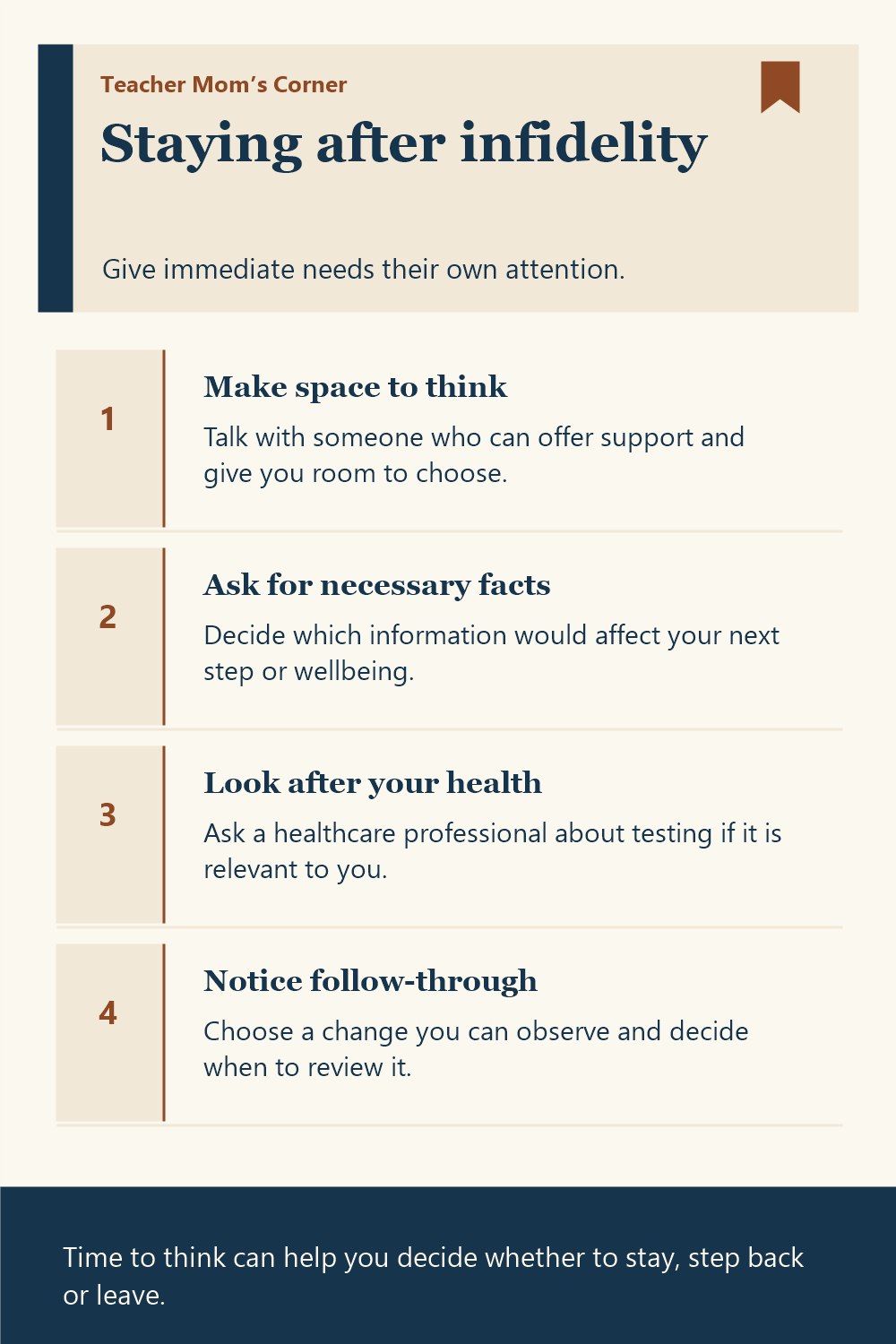
Staying after infidelity
Give immediate needs their own attention.
- Make space to think Talk with someone who can offer support and give you room to choose.
- Ask for necessary facts Decide which information would affect your next step or wellbeing.
- Look after your health Ask a healthcare professional about testing if it is relevant to you.
- Notice follow-through Choose a change you can observe and decide when to review it.
Time to think can help you decide whether to stay, step back or leave.