

Long-distance partners often have to plan things they would otherwise work out in person. Talk about what you need to feel connected and what you can realistically offer with your schedules, money and responsibilities.
Choose one routine to try, and decide when you will review it together.
On this page
- 1. Say what each of you wants now
- 2. Find a communication rhythm
- 3. Ask what kind of contact helps
- 4. Keep your own time and privacy
- 5. Say what you need directly
- 6. Plan time that feels like a date
- 7. Plan visits around both people’s lives
- 8. Revisit the longer-term options
- 9. Check that the arrangement still works

1. Say what each of you wants now
Talk about whether you are dating casually, exclusive or making longer-term plans. Name what you know and what you still need time to decide.
2. Find a communication rhythm
Try a predictable call or message schedule that fits work, sleep and time zones. Agree on how to let each other know if a plan changes.
3. Ask what kind of contact helps
Some people feel closer on a call, while others prefer messages they can read later. Talk about how you want to handle sensitive topics and what you would like to save for a call.
4. Keep your own time and privacy
Make room for friends, rest and hobbies. If a post or a missed message worries you, ask about what happened. Agree on what you want to share without demanding access to accounts or locations.
5. Say what you need directly
“I miss you and would like to hear your voice this week” is easier to answer than a hint. Ask what they can do and offer a time or alternative you can keep.
6. Plan time that feels like a date
Try cooking the same meal, reading together or watching a film while you talk. Choose an activity you both enjoy and give it your attention.
7. Plan visits around both people’s lives
Talk about costs, travel time, childcare, time off and where each person will stay. Decide how to share planning and what to do if a visit becomes impractical.
8. Revisit the longer-term options
If living closer matters to you, name the decisions that would affect a move. Talk about what information you need, who would carry the cost and when you can revisit it.
9. Check that the arrangement still works
Ask what feels fair, what each person needs more of and whether you both want to continue. You can change the plan if the current arrangement keeps leaving one person overwhelmed.
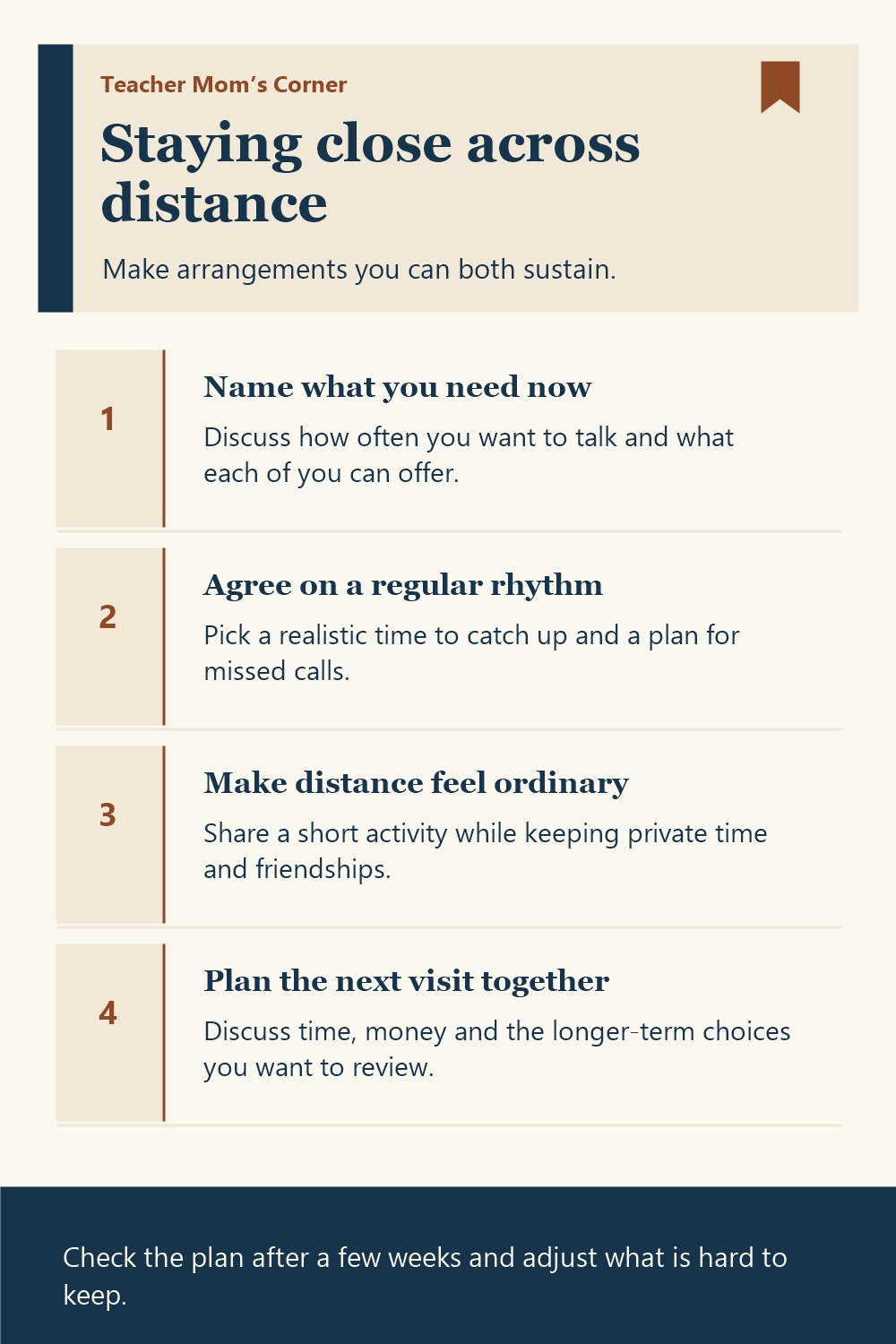
Read the infographic in text
Staying close across distance
Make arrangements you can both sustain.
- Name what you need now Discuss how often you want to talk and what each of you can offer.
- Agree on a regular rhythm Pick a realistic time to catch up and a plan for missed calls.
- Make distance feel ordinary Share a short activity while keeping private time and friendships.
- Plan the next visit together Discuss time, money and the longer-term choices you want to review.
Check the plan after a few weeks and adjust what is hard to keep.