

If you wake up feeling overwhelmed, take a moment to consider what the day is asking of you. If faith is part of your life, a prayer or a few lines of Scripture can offer a way to pause and reflect.
Ask what would make the next hour easier. You might need food, rest, one smaller task or someone to help. You can make a practical change alongside your spiritual practice.
On this page

Choose a pause you can fit into the day
Try sitting quietly for a few minutes, taking a short walk or reading a passage that matters to you. If prayer helps, say what feels difficult in your own words. Choose a moment you can realistically protect.
Move one thing off the list
Identify what has to happen today, what can wait and what someone else can do. If you are putting off a difficult task, start with a small action such as opening the document or asking what the deadline actually is.
Pay attention when irritation or worry builds
If you’re starting to snap at people, step away if you can and return when you can speak more calmly. Say what you need and arrange help when a schedule or responsibility is too much to manage alone.
Make room for basic care
Try a meal, water, enough time to sleep or a quiet break. If you’re feeling ill or exhausted for a sustained period, talk with a health professional about what might be contributing.
Reach out if daily life is getting harder
Persistent changes in sleep, appetite, mood or concentration may call for additional support. A trusted person can help you take the first step. The National Institute of Mental Health’s guide explains when to seek professional help.
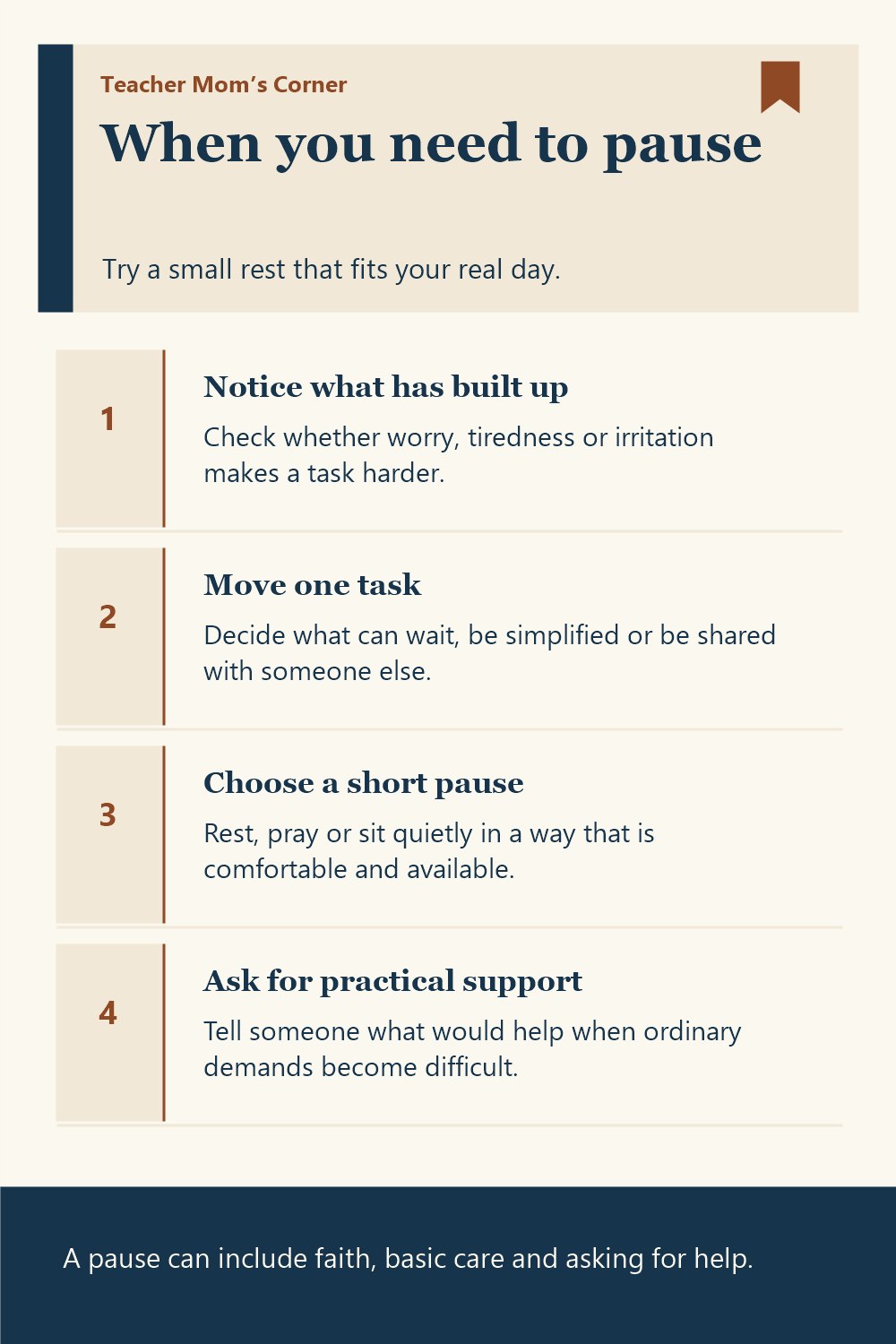
Read the infographic in text
When you need to pause
Try a small rest that fits your real day.
- Notice what has built up Check whether worry, tiredness or irritation makes a task harder.
- Move one task Decide what can wait, be simplified or be shared with someone else.
- Choose a short pause Rest, pray or sit quietly in a way that is comfortable and available.
- Ask for practical support Tell someone what would help when ordinary demands become difficult.
A pause can include faith, basic care and asking for help.