

Choosing a long-term partner involves more than deciding whether you feel a spark. It also means learning how your lives might fit: what you value, how you handle disagreements and whether you can make decisions together without giving up your own voice.
You do not need to choose perfectly or meet someone by a particular birthday. Marriage, being single and being divorced do not determine your worth or guarantee happiness. Focus on the relationship you are actually considering and the information available to you now.
On this page

Name what matters in daily life
Start with a few priorities rather than a description of an ideal person. Perhaps you want honesty about plans, respect for your work, a shared view of parenthood or room for religious practice. Translate each priority into something you could discuss or observe.
“They should care about me” might become “We both follow through on arrangements and tell each other when something changes.” Separate essential needs from preferences you could enjoy without requiring them. A shared hobby can be lovely without being necessary for a workable partnership.
Talk about what long-term commitment means to each of you. There is no biological rule requiring a particular length or form of relationship. Ask about the future you each want rather than assuming that attraction supplies the same answer.
Learn about the person over time
Notice ordinary behaviour alongside memorable dates. Do they listen when you disagree, respect a declined invitation and take responsibility for a broken agreement? Consider patterns rather than expecting one conversation to reveal everything.
You can meet someone through friends, an activity or an online introduction. The origin story does not tell you how they will treat you. Keep learning about the person and retain your friendships, routines and independent judgement as you do.
It is useful to discuss a modest decision together before assuming you can manage major ones. Planning an affordable outing, for example, gives you a chance to compare preferences, share the work and see how each person responds when the first idea does not suit.
Choose a pace you can think within
Strong feelings do not require immediate shared housing, financial commitments or engagement. Ask what you know, what is still unclear and what a decision would change. You can ask for more time even if the relationship feels promising.
Parenthood is a personal choice, not an assumed stage of every partnership. Discuss whether either of you wants children and what caring responsibilities already exist. If you have questions about fertility or reproductive health, seek individual guidance from a qualified clinician rather than allowing a dating deadline to substitute for information.
Loneliness, excitement and fear of missing out can all be present while you decide. You do not have to eliminate those feelings first. Try asking: “Would I choose this next step if nobody were judging my timeline?” Harmful treatment remains the responsibility of the person doing it; choosing quickly does not make someone responsible for being mistreated.
Consider advice without surrendering choice
Ask trusted people for concrete observations rather than a verdict about your partner. “What did you notice that concerned you?” is more useful than accepting a vague claim that someone is wrong for you. Consider the information alongside your own experience.
Advice can also reflect someone else’s preferences about age, marriage, culture or family structure. You can appreciate their concern and still make a different choice. If a concern involves pressure or fear, take it seriously and seek support privately.
A clear limit might be: “I’m happy to talk about how the relationship is going, but I don’t want a deadline for getting married.” Our guide to creating healthy boundaries in relationships offers more examples of expressing needs and limits.
Discuss the practical partnership
Make space for the subjects that shape everyday life. You do not need to settle them all in one evening, but recurring avoidance is useful information.
- Money, spending habits and how shared costs might work.
- Household tasks, care responsibilities and time for rest.
- Where you want to live and how work or travel affects that.
- Privacy, friendships, affection and ways of handling disagreement.
Attraction and financial compatibility are not automatically shallow concerns. Discuss them without reducing someone to appearance or income. A workable agreement needs room for both people’s circumstances and preferences.
Compromise should be something you can freely consider, not a demand to ignore an essential need. After a conversation, notice whether agreed changes happen. You may choose to continue, slow down or acknowledge that your plans differ. Choosing carefully means staying able to respond to what you learn.
Read the infographic in text
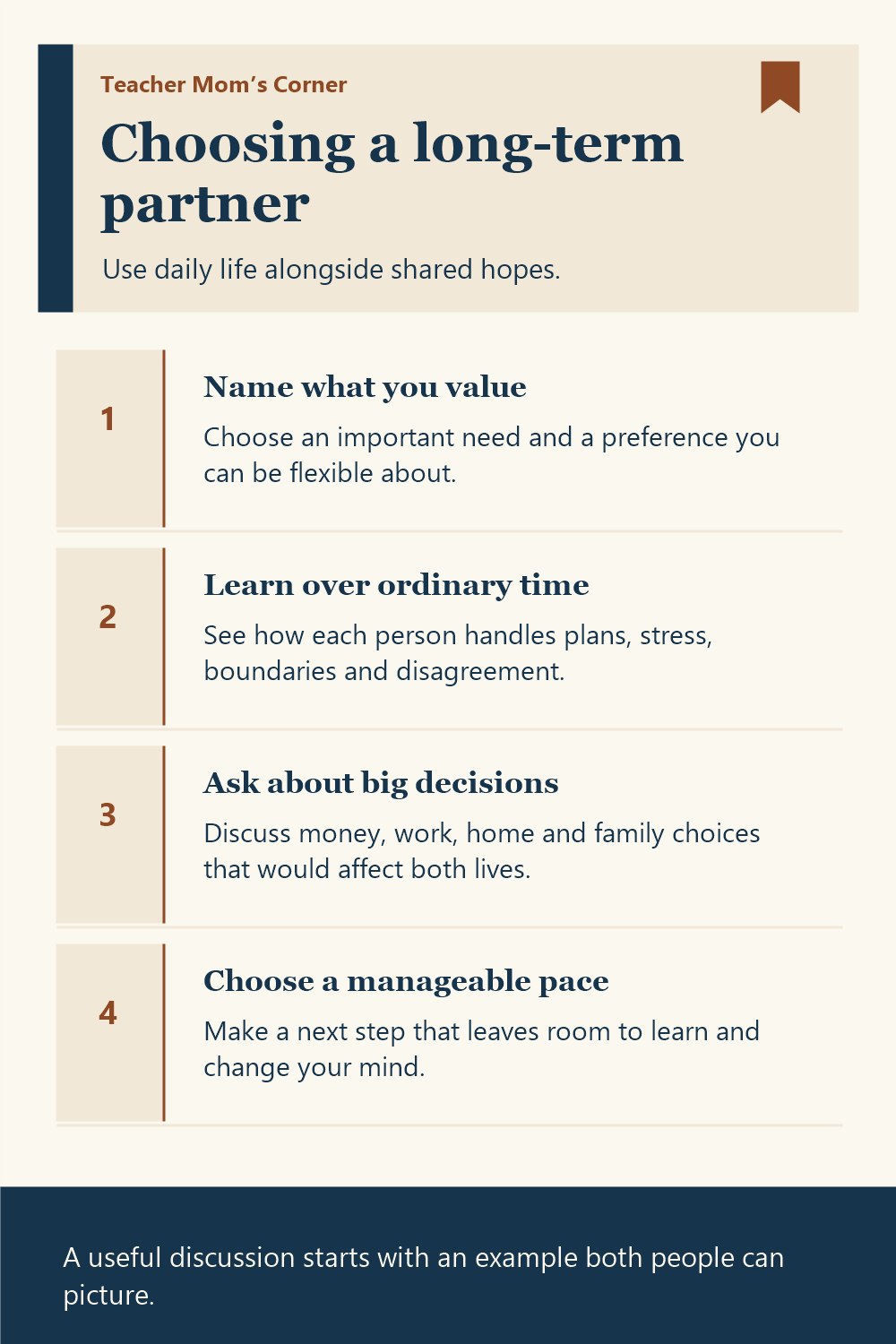
Choosing a long-term partner
Use daily life alongside shared hopes.
- Name what you value Choose an important need and a preference you can be flexible about.
- Learn over ordinary time See how each person handles plans, stress, boundaries and disagreement.
- Ask about big decisions Discuss money, work, home and family choices that would affect both lives.
- Choose a manageable pace Make a next step that leaves room to learn and change your mind.
A useful discussion starts with an example both people can picture.