

After a breakup, you may hope that the relationship can begin again. Before deciding what to say or do, ask whether contact is welcome and whether both people are interested in reconsidering. A reunion needs mutual choice; no technique can make another person want it.
You can take that hope seriously without putting the rest of your life on hold. Consider what ended, what would need to change and whether a conversation would be respectful and safe.
On this page
1. Respect the current boundary
If your ex has asked for no contact, declined a reunion or blocked messages, respect that decision. Do not use a new account, mutual friends or unexpected visits to get around it. Sincere feelings do not turn unwanted contact into an invitation.
If you share children or other responsibilities, necessary practical communication is separate from a request to restart the relationship. Keep arrangements focused and avoid asking a child to carry personal messages.
Taking space can help you think about your own needs. It does not need a fixed number of days, and it should not be used as a tactic to make someone miss you or become jealous.
2. Ask what you want to return to
Distinguish missing the person from wanting the relationship as it actually was. Write down what you valued, what repeatedly hurt and what brought the relationship to an end. Avoid replacing difficult facts with only the best memories.
Ask whether the disagreement involved a practical issue, a major incompatibility or harmful behaviour. Different wishes about children, commitment or where to live may remain important even when you still care about each other.
You can recognise your mistakes without assuming that every breakup is equally both people’s fault. Abuse, coercion and threats are the responsibility of the person choosing those actions. If you fear a partner’s response, seek individual support before considering contact.

3. Invite one clear conversation
If contact is welcome and no refusal has been given, a brief question can be enough: “Would you be open to talking about whether we both want to reconsider the relationship?” Let the other person decline without arguing or asking them to justify the answer.
A friendly reply, a familiar look or an invitation to chat does not establish an agreement to reunite. Ask directly rather than reading private intentions into gestures. If the answer remains unclear, you can step back.
Spiritual reflection or a reading may help you explore your own hopes. It cannot tell you what your ex consents to or guarantee a future together. Their actual answer matters.
4. Discuss change in practical terms
If you both want to talk, focus on the issues that ended the relationship. What would each person do differently? How would you handle a missed agreement, a disagreement or a request for time apart? Look for specific commitments that fit your lives.
The NHS guide to healthy relationships discusses listening, boundaries and room for your own needs. Those are useful topics for a conversation about starting again.
You do not need to change your appearance, become permanently cheerful or use sex as leverage to earn commitment. Discuss affection and intimacy through mutual consent, with room for either person to pause or change their mind.
5. Leave room for either answer
If you both choose to try again, agree what that means rather than assuming you are back together after one good meeting. You can move gradually and review whether actions match the agreements. A promise is a starting point, not proof that every issue is resolved.
If one person does not want a reunion, respect that answer. You can grieve the possibility and make plans that do not depend on it changing. The guide to Getting Over Someone: Rejection, Breakups and Your Next Steps offers support for that part.
For questions about affection and pressure, see Love Bombing or Affection? Pace, Boundaries and Patterns of Behaviour. Your next decision can make room for care, uncertainty and your right to choose.
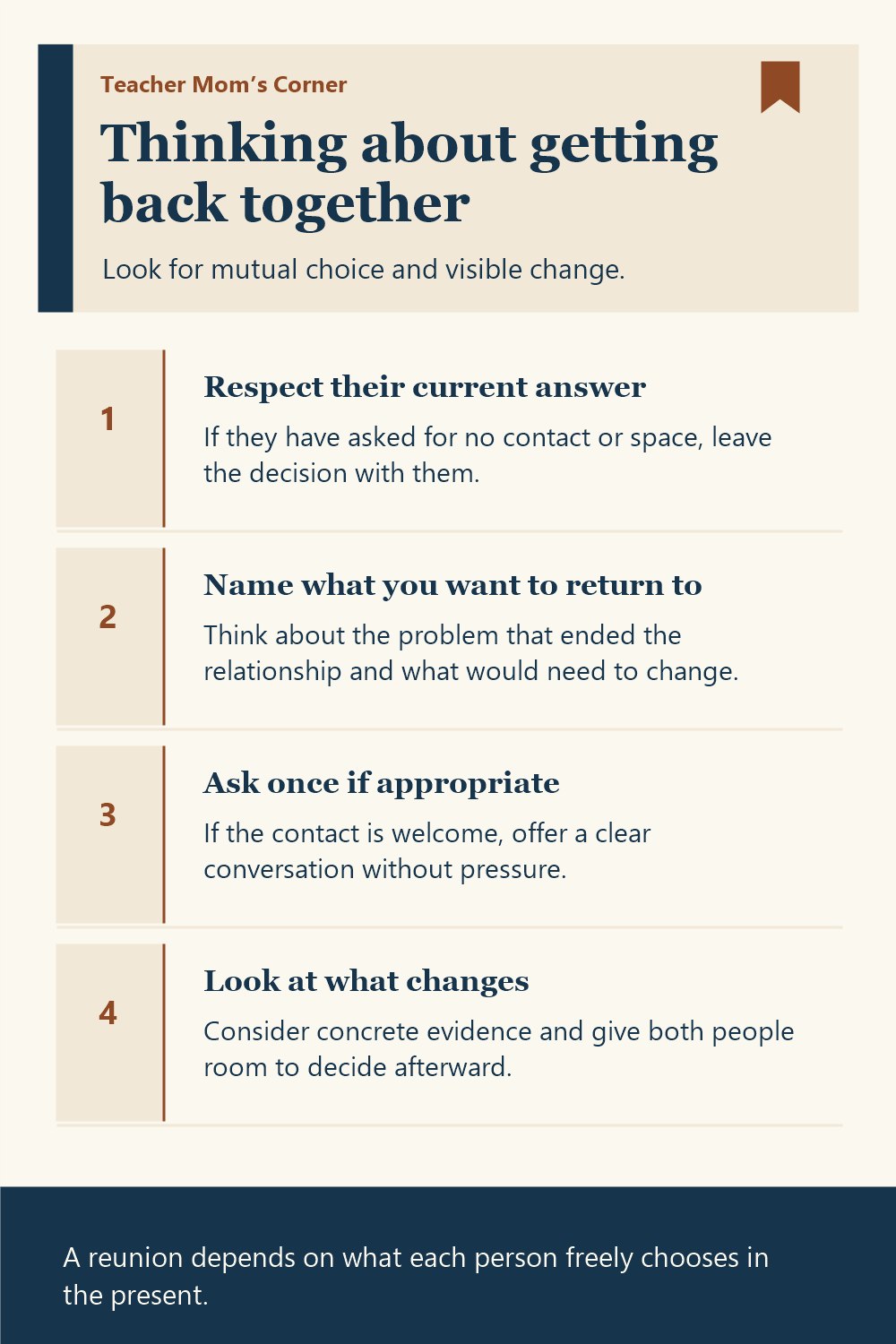
Read the infographic in text
Thinking about getting back together
Look for mutual choice and visible change.
- Respect their current answer If they have asked for no contact or space, leave the decision with them.
- Name what you want to return to Think about the problem that ended the relationship and what would need to change.
- Ask once if appropriate If the contact is welcome, offer a clear conversation without pressure.
- Look at what changes Consider concrete evidence and give both people room to decide afterward.
A reunion depends on what each person freely chooses in the present.