

Finding out that a partner has broken an agreement about fidelity can leave you hurt, angry, numb or unsure what to do. You may want answers immediately or need distance before another conversation. You do not have to decide the future of the relationship all at once.
Start with your immediate needs, what you know and the support available to you. Caring about someone does not require forgiving them, staying together or proving that you can rebuild.
On this page

1. Give yourself room to decide
Separate confirmed information from questions you still have. A direct admission, a message you saw and a rumour are different kinds of information. You can acknowledge uncertainty while protecting your privacy and deciding what contact you want.
Ask what you need for the next day or two: sleep, company, help with children or time away from an argument. You do not need to make a public announcement or explain every detail to family and friends before you know what you want.
Your partner may want a quick answer. You can say, “I am not ready to decide.” Their distress or apology does not create a deadline for your forgiveness or commitment.
2. Care for practical and health needs
Keep essential tasks manageable. If you share a home, finances or parenting responsibilities, consider what arrangements are needed while you think. For decisions with legal or financial consequences, seek advice that fits your circumstances before making major changes.
If there may have been a sexual health exposure, contact a qualified clinician or sexual health service about appropriate tests, timing and any urgent care. The NHS information on sexually transmitted infections explains that infections may have no symptoms. You do not need to wait for symptoms before asking for advice.
You can pause sexual contact or decline intimacy while deciding what feels right. Neither reassurance nor a wish to repair the relationship replaces your consent.
3. Set boundaries around conversations
Consider what information would help your decisions and what details you do not want. You can ask direct questions without agreeing to an interrogation that continues through the night. A break does not mean the issue has been forgotten.
Choose a time and place where you can end the conversation if needed. Avoid involving children in adult details or asking them to take sides. A trusted adult can offer support without circulating private information.
If there are threats, intimidation or fear of retaliation, prioritise safety and individual support. You are not required to confront someone, reveal what you know or continue a discussion to prove that your concerns are valid.
4. Consider what repair would involve
If you are considering staying, ask what accountability would look like in action. This may involve honest answers to relevant questions, taking responsibility without blaming you and agreeing what fidelity means going forward. Discuss what each person is freely willing to do.
Reassurance and remorse cannot be established by a single emotional conversation. Notice whether actions remain consistent over time. You can reconsider your decision if the arrangement does not work for you.
Forgiveness, trust and continuing a relationship are separate choices. You can forgive and still leave, remain undecided or decide not to forgive. None of those choices needs to be used as a test of how deeply you loved the person.
5. Choose support that fits your situation
A qualified mental health professional can help you consider your own needs and cope with distress. If you both want to explore repair and can speak freely without fear, you might discuss suitable relationship support with a qualified professional.
If abuse is present, seek individual specialist advice first. The National Domestic Violence Hotline warns about couples counselling with an abusive partner, including the risk that information shared may later be used against you. A shared session is not automatically a safe place for disclosure.
For more support with separation or unreturned hope, read Getting Over Someone: Rejection, Breakups and Your Next Steps. If affection and pressure are hard to distinguish, see Love Bombing or Affection? Pace, Boundaries and Patterns of Behaviour. You can choose a next step without promising an outcome.
Read the infographic in text
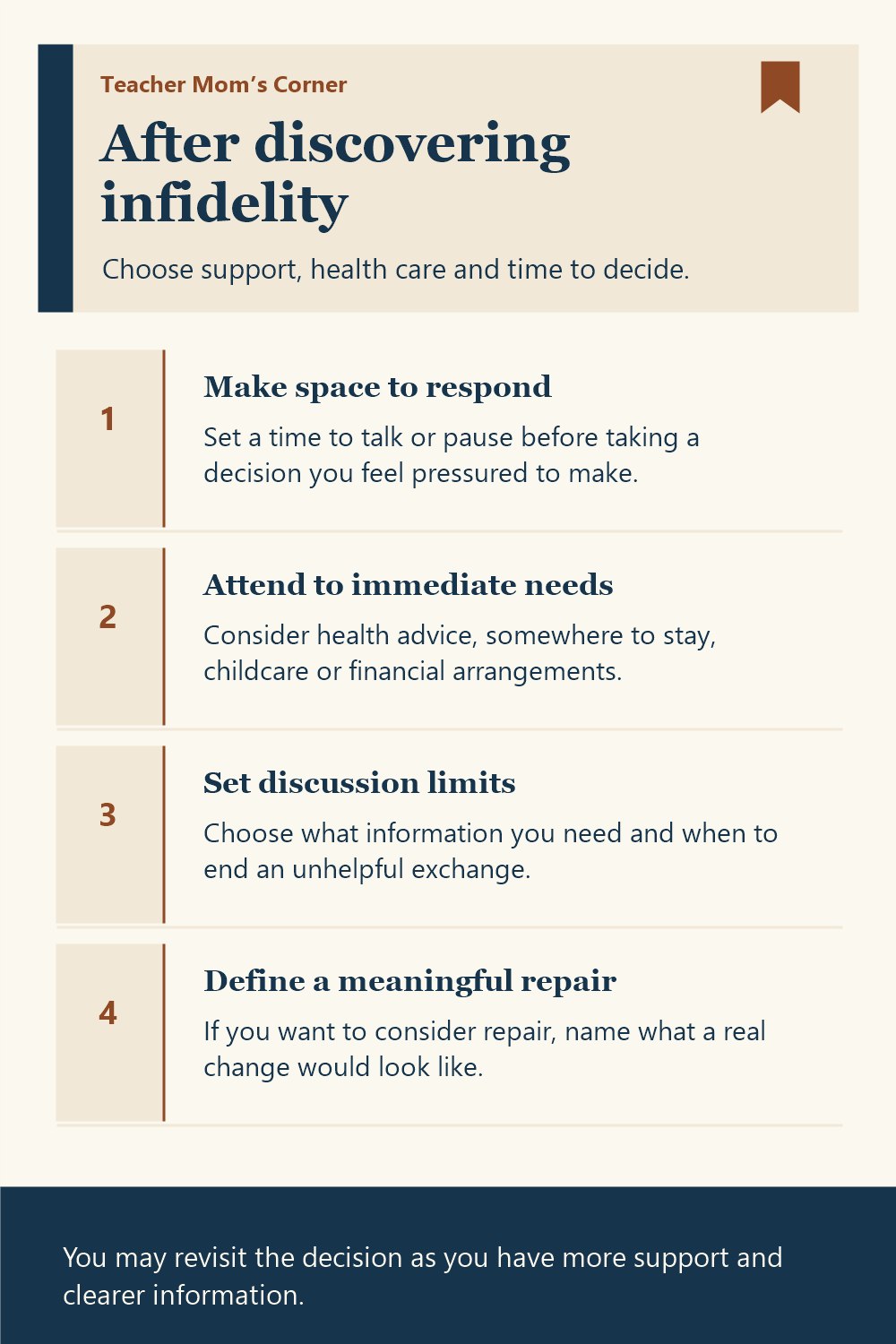
After discovering infidelity
Choose support, health care and time to decide.
- Make space to respond Set a time to talk or pause before taking a decision you feel pressured to make.
- Attend to immediate needs Consider health advice, somewhere to stay, childcare or financial arrangements.
- Set discussion limits Choose what information you need and when to end an unhelpful exchange.
- Define a meaningful repair If you want to consider repair, name what a real change would look like.
You may revisit the decision as you have more support and clearer information.