

When someone hurts you and does not apologise, you may be left with an unresolved question, a practical loss or feelings that return unexpectedly. You might want an acknowledgement they are not offering. You do not have to describe the situation as forgiven before you can look after yourself.
Forgiveness has different personal and spiritual meanings. Some people find it helpful; others prefer to focus on boundaries, support or what happens next. Neither an apology nor a particular emotional milestone is required before you can set a limit.
On this page
1. Be clear about what remains unresolved
Identify the particular action and its effect. Perhaps a relative shared private information, a friend failed to return something or a partner dismissed a concern. Naming the event can help you decide what would be useful now.
You may want a correction, an explanation, a practical repair or simply less contact. Those are different needs. Feeling upset does not mean you have surrendered control of your life, and another person’s refusal to apologise does not make the hurt your fault.
Keep responsibility specific. You can take responsibility for your own words or actions without accepting blame for someone else’s threats, humiliation or violence.
2. Choose whether to ask for an acknowledgement
Where a conversation feels safe and worthwhile, make a clear request: “You shared something I asked you to keep private. I want you to correct it with the people you told and check with me before sharing personal information again.”
The response may help you understand what the person is willing to do. An apology can matter, but repeated behaviour also deserves attention. A carefully worded “sorry” does not by itself restore trust.
You do not have to keep explaining until the other person agrees with your account. If they threaten you, mock the request or use the conversation to pressure you, consider ending it and seeking support separately.

3. Separate forgiveness from renewed access
You can decide to forgive while keeping distance. You can also resume limited contact without claiming that everything is resolved. Forgiveness, reconciliation and trust are different choices.
Think about the limit that addresses the actual problem. You might stop sharing private information with this person, meet only in a group or use a particular channel for necessary arrangements. Choose what you can put into practice in your circumstances.
If faith or a spiritual practice is important to you, it can be a source of reflection. A belief about forgiveness does not establish that another person is safe or that you must give them the same access to your life.
4. Make room for feelings and support
Anger, sadness or disappointment can remain even after you make a decision. You do not need to force gratitude, find a lesson immediately or pretend that the event no longer matters.
Consider talking with someone who can listen without insisting on reconciliation. If anger feels difficult to manage or is affecting everyday life, the NHS has information on getting support with anger. Seeking help does not require excusing the person who hurt you.
Keep children outside adult disputes
If the person is part of family life, avoid asking children to carry an apology, choose a side or persuade an adult to change. Keep necessary arrangements clear and seek adult support for the conflict.
5. Choose a next step at your own pace
You might make one practical request, review a contact arrangement or decide not to pursue another conversation. If an ongoing pattern involves fear, control or harm, prioritise safety and individual support rather than a joint forgiveness exercise.
You may revisit your feelings or limits later. That does not erase an earlier decision or mean you have failed to move on. Focus on what protects your privacy, meets a practical need or makes the next few days more manageable.
The other person may never give the acknowledgement you wanted. You can still seek care, make choices and build a life that has room for more than this unresolved event.
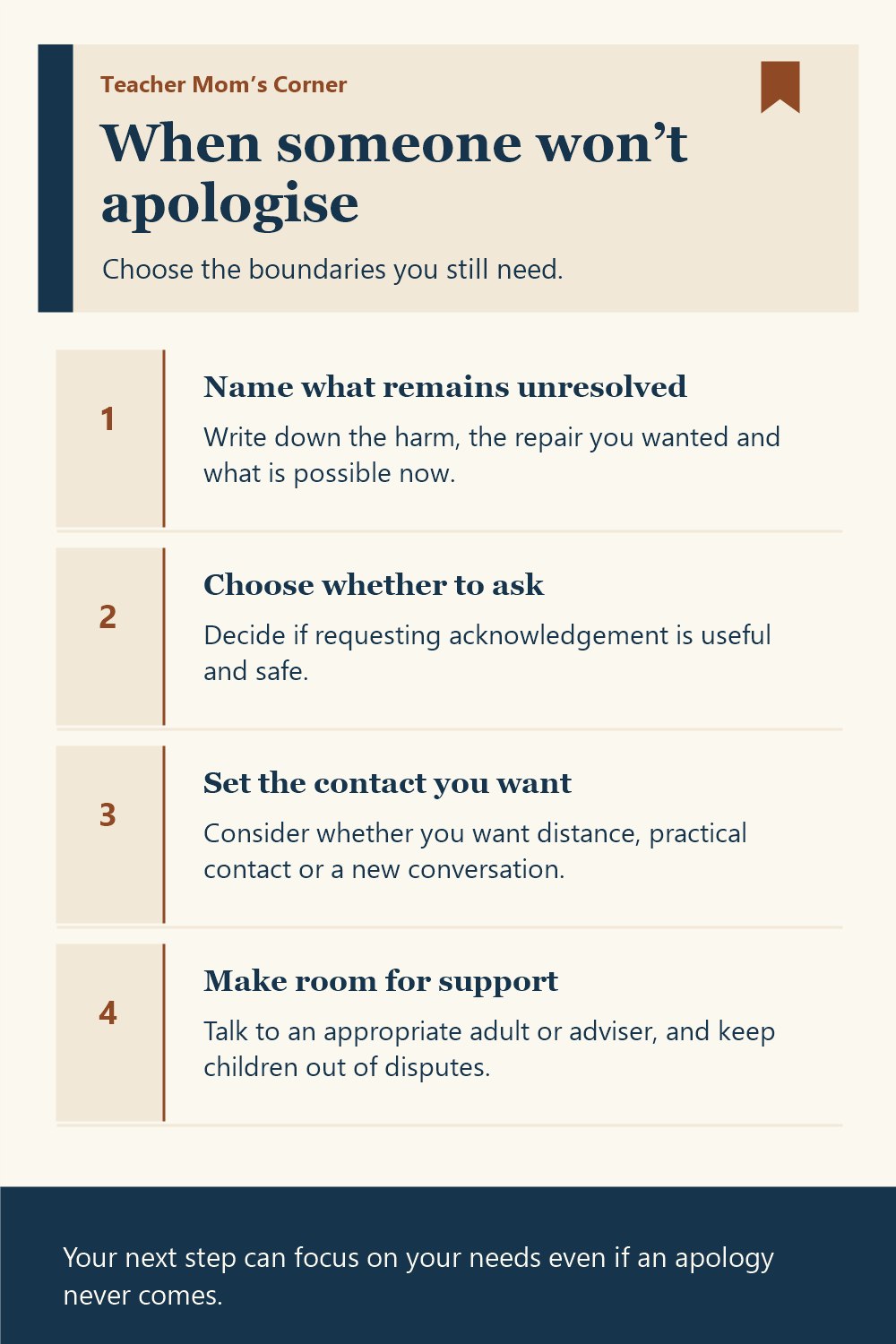
Read the infographic in text
When someone won’t apologise
Choose the boundaries you still need.
- Name what remains unresolved Write down the harm, the repair you wanted and what is possible now.
- Choose whether to ask Decide if requesting acknowledgement is useful and safe.
- Set the contact you want Consider whether you want distance, practical contact or a new conversation.
- Make room for support Talk to an appropriate adult or adviser, and keep children out of disputes.
Your next step can focus on your needs even if an apology never comes.