

If conversations repeatedly turn into insults, pressure or arguments about people who aren’t there, start by noticing what happens and what it costs you. You can set a limit on what you’ll discuss or how long you’ll stay in the conversation.
On this page
Name the behavior you want to address
Think of one recent example. “When you repeated what I told you in confidence, I felt exposed” is specific enough to discuss. If a conversation is about someone else, you can say “I’d like you to raise that with them directly.”

Pause before the exchange escalates
Use a short sentence and give a time to come back if you want to continue. “I’m too upset to talk clearly. I’ll check in tomorrow.” If it’s a group chat, mute it for a while and return to the specific issue once you can focus on it.
Set a limit you can carry out
“If the name-calling continues, I’ll end the call” describes something you can do. Follow through calmly if it happens. For a shared obligation, move the discussion to a written channel or use a narrow agenda for the next conversation.
Review how much contact works for you
After a few interactions, ask whether the person respects the limit and whether you recover more easily afterward. You might decide to meet in a group, share fewer personal details or take a break from contact. If there are threats, stalking or physical intimidation, focus on getting safe and ask for help from someone you trust or a local support service.
Read the infographic in text
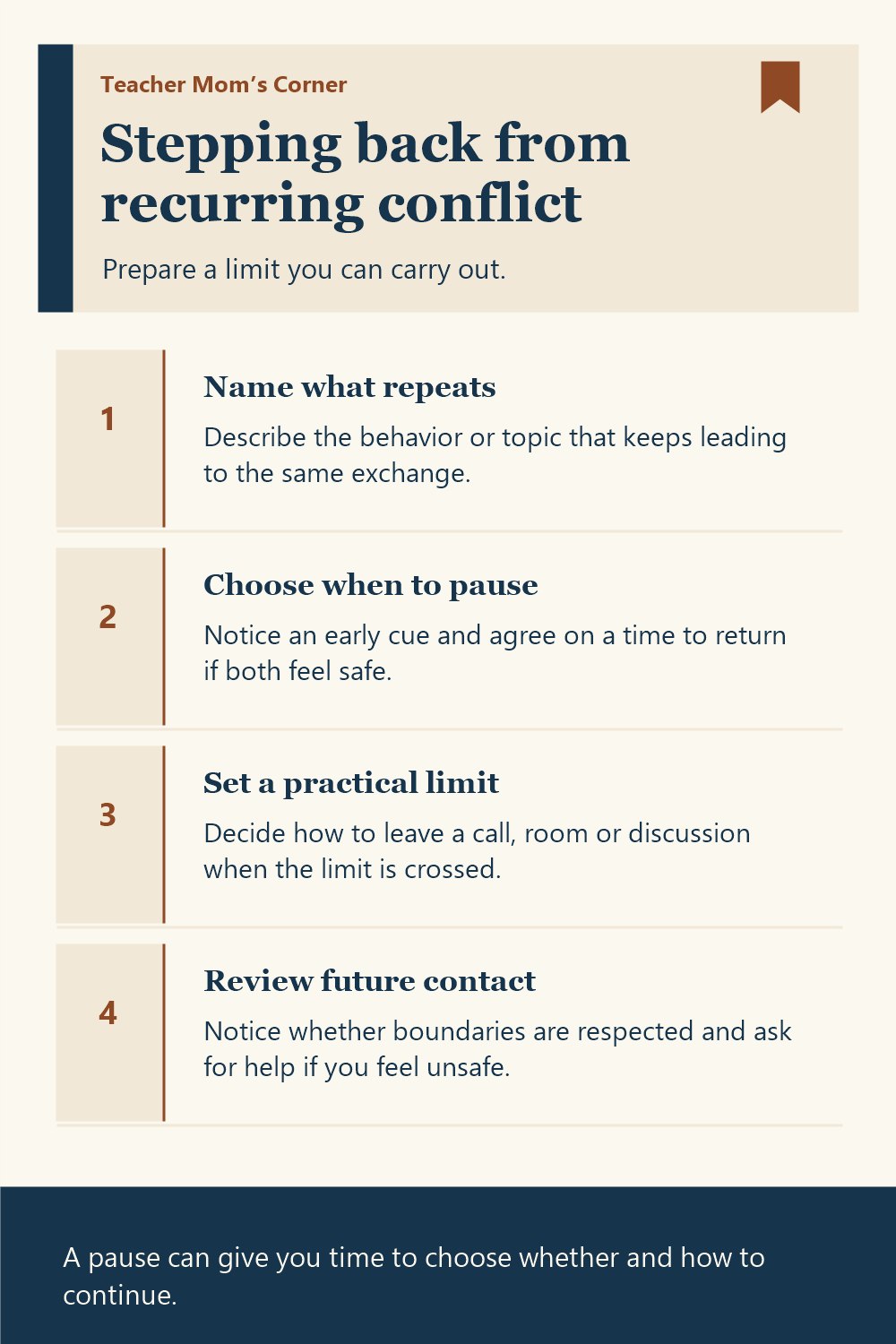
Stepping back from recurring conflict
Prepare a limit you can carry out.
- Name what repeats Describe the behavior or topic that keeps leading to the same exchange.
- Choose when to pause Notice an early cue and agree on a time to return if both feel safe.
- Set a practical limit Decide how to leave a call, room or discussion when the limit is crossed.
- Review future contact Notice whether boundaries are respected and ask for help if you feel unsafe.
A pause can give you time to choose whether and how to continue.