

An after-school meltdown can leave you puzzled when the classroom report sounded positive. Start with what you can observe: tears, exhaustion, hunger, noise or difficulty with the transition. One hard afternoon does not reveal the cause by itself.
Reconnect before asking for a full account of the day. A warm greeting, an appropriate snack or drink and a manageable pause may help you understand what your child needs while keeping clear limits around safety.
A calmer order for the first few minutes
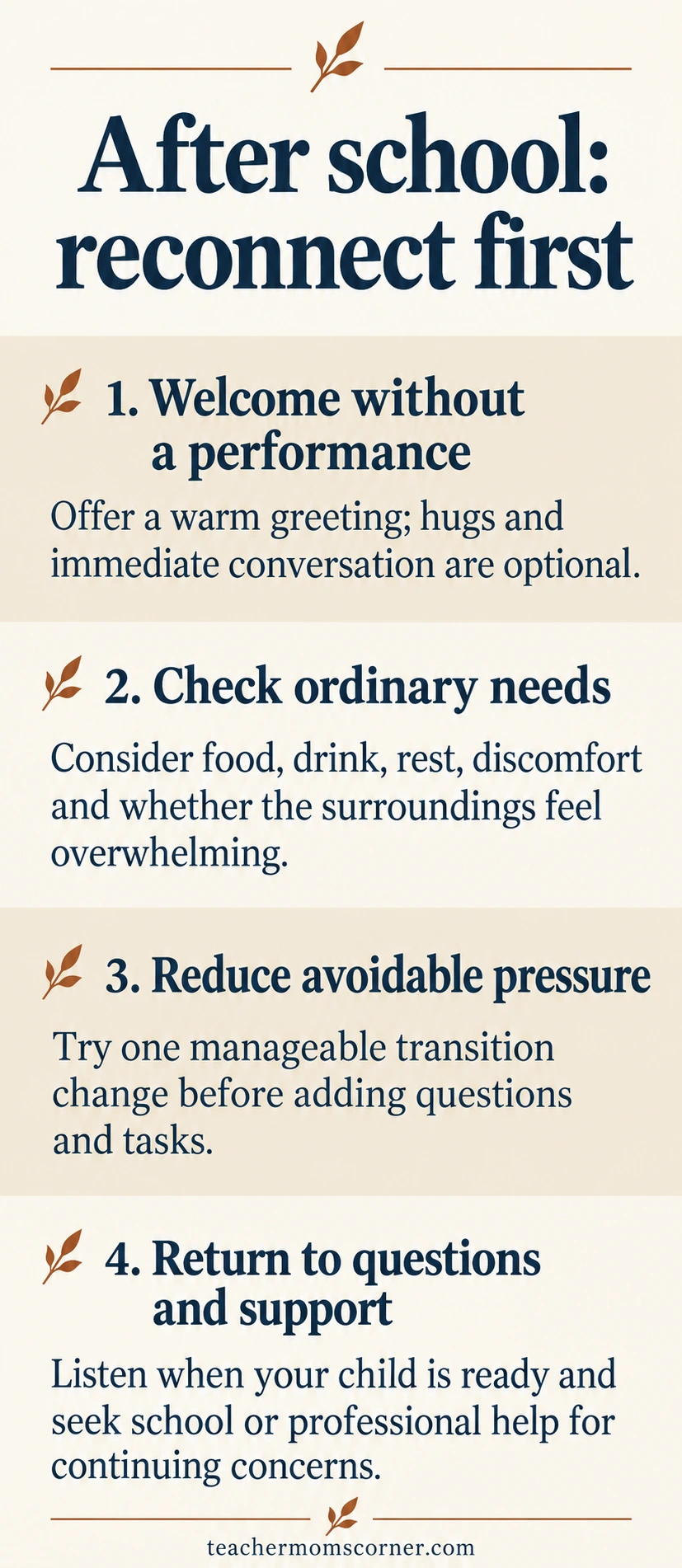
Read the guide as text
- Welcome without a performance. Offer a warm greeting; hugs and immediate conversation are optional.
- Check ordinary needs. Consider food, drink, rest, discomfort and whether the surroundings feel overwhelming.
- Reduce avoidable pressure. Try one manageable transition change before adding questions and tasks.
- Return to questions and support. Listen when your child is ready and seek school or professional help for continuing concerns.
Looking At the Behavior
Pay attention to what happens right away without deciding what it means. If your child cried when you asked them to put your shoes away, this is something you observe. If you say that they were trying to control the whole family, this is an interpretation that you need to be more open about.
Before you react, find out what happened. Maybe things were too noisy, they missed a meal, had an unexpected pickup change, or had a hard transition leaving school. The trigger you see might be the final straw for them after having a hard day.
The phrase "after-school restraint collapse" is sometimes used for emotional release after school. The phrase alone does not establish a diagnosis or identify the cause for an individual child.
You can use this description without thinking that your child is masking, neurodivergent, traumatized, or that they're totally fine. Seeing a pattern gives you a starting point to be more observant. This doesn't replace listening, school information, or the right kind of assessments when needed.
Start With a Warm and Kind Greeting
When you pick up your child, try starting with a simple greeting that makes them feel welcome instead of asking several questions right away. Something like, "I'm so happy to see you," can help them feel comfortable. Depending on what your child prefers, you might offer a hug, hold their hand, give them a little wave, or simply spend a few quiet minutes together.
Some children love talking about their day as soon as they see you, while others need a little time to relax before they're ready to share anything. Even a simple question like, "How was your day?" can feel overwhelming when a child is already tired or frustrated.
Instead of expecting an immediate answer, you might say, "You don't have to tell me everything right now. We can talk whenever you're ready." This lets your child know that you're interested in their day without making them feel pressured to talk.
It's also important to remember that showing affection doesn't always mean giving hugs or expecting excitement. If your child isn't interested in a hug, that doesn't necessarily mean they don't want to feel close to you. Sometimes walking beside them, helping carry their belongings, or simply being there is enough.
The important thing is helping your child understand that you're happy to see them and that they don't have to act a certain way to receive your love and attention.
Make Sure Their Basic Needs Are Met
Sometimes a child comes home feeling upset or frustrated simply because they're hungry, thirsty, tired, or physically uncomfortable. Before assuming they're having an attitude or behaving badly, think about whether something else might be bothering them.
Offering a small snack or something to drink can help them settle down after a long day. Keep their age, food allergies, and personal needs in mind, and try not to overwhelm them with too many choices. You also don't need to make them explain why they're upset before offering something to eat or drink.

It's worth checking if something is making them uncomfortable, too. Maybe their shoes are hurting their feet, their clothes feel too tight, they're too hot, or they have a headache. Even little things like these can make an already stressful day feel worse. A simple question can help you understand what's going on without making your child feel like they're being questioned about everything.
Meeting your child's basic needs doesn't mean you're rewarding bad behavior or allowing them to do whatever they want. You can still set boundaries while helping them feel better. For example, you might say, "Here's some water. Let's get comfortable, and then we can figure things out."
But if your child seems sick, injured, or unusually uncomfortable, it's important to take those concerns seriously instead of assuming they're just having a difficult time emotionally.
Sometimes helping your child feel better starts with taking care of the little things before expecting them to talk about the bigger ones.
Take Away Some of the Demands
Think about the first 10 or 20 minutes as a time to let your child transition, instead of an extension of their daily schedule. Homework, chores, sharing with siblings, and a busy activity might be reasonable later, but hard when they first get home.
You can put things off for a while and give your child a little while to rest. Compare a string of demands about the bag, washing, school and reading with a simpler invitation: "Let's wash our hands and have a snack." Return to other tasks after the child has had a chance to settle.
The timing needs to be an experiment, not a set rule. Not all children need a certain kind of downtime. Pay attention to their movements, give them some quiet, and add an ordinary task to see how they do. Pay attention to what helps instead of just thinking that less demand means they'll sit still or want to be alone.
Offer Quiet Choices
An easy transition can include things like reading, drawing, sitting close to you, or outdoor play. The right option depends on the child, the setting, and what is safe for everyone.
Try offering your child two manageable choices instead of a long list of options. You might say something like, "Would you like to draw quietly or take a walk with me?" This can be easier than asking them to tell you what they need.
Don't insist on calming activities if the child doesn't like them. Some children like music and find it soothing, but others feel that it's just noise. Some like touch, and others need space.
Make the space easy. Reduce sounds, have a little conversation, and create a space where they can have time to pause. These changes don't need to be expensive or elaborate. A corner or a few questions might be more useful than special products that are given to solve every hard afternoon.
Safety and Limits
Everyone's allowed to have strong feelings, but hurting someone is not allowed. If your child hits, throws objects, or moves toward traffic, put safety first. Always use brief language and take appropriate action while keeping safety clear.
You can say, "I will not let you hit your sister. I am moving you two apart." Protect siblings and remove hazards when you can. Don't take time for a long explanation when there's an intense moment.
This isn't a guide for instruction on physical restraint. If the behavior is dangerous or recurring, get professional advice about safe responses and support. If there's a medical emergency, contact the appropriate local emergency help.
After safety is restored, reconnect without pretending nothing happened. You can comfort a child that's upset and then let them later repair the harm. Warmth and accountability can work together at different points in the same afternoon. The child doesn't need to be shamed for having feelings, and another person doesn't need to accept being hurt by them either.
Talk About Their Day When They're Ready
Once your child has had some time to relax and calm down, you can gently ask about something that happened during their day. Instead of expecting them to explain everything at once, try asking a simple question like, "Was there anything that made today difficult?" or "Is there something we could do to make coming home a little easier?"
Remember that children don't always know how to explain why they're upset or overwhelmed. Sometimes they might say, "I don't know," and that's okay. Even adults have trouble figuring out exactly what's bothering them at times. Giving your child a little space can make it easier for them to open up when they're ready.
You can also bring up something you noticed without making your child feel like they've done something wrong. For example, you might say, "I noticed you were having a hard time putting your backpack away today. Was something bothering you?" Then give them a chance to respond instead of assuming you already know what happened.
It's also important not to turn every evening into a conversation about difficult behavior. Some days, your child might just need a little extra patience or a small change in their routine. Make time for laughing, playing games, talking about their interests, and enjoying being together.
Your child needs to know that there's more to who they are than the difficult times they sometimes experience. Helping them feel loved and understood can be just as important as figuring out what caused the frustration in the first place.
Keep Track of What Helps Your Child
If your child regularly struggles with the transition from school to home, keeping a few simple notes might help you notice patterns. You don't need to write down everything that happens. Just spend a week or so paying attention to things like what time you picked them up, whether they had something to eat, any changes in their schedule, and what seemed to help them settle down.
Try to focus on what actually happened instead of deciding whether your child had a good or bad day. For example, writing, "We had a quiet ride home, ate a snack, and spent some time playing outside before things improved," gives you more useful information than simply writing, "Good behavior today."
As you look over your notes, you might begin noticing certain things that seem to make afternoons easier or more difficult. Maybe your child feels better after having a snack, or perhaps they need some quiet time before talking about school. But remember that one successful afternoon doesn't necessarily mean you've found the exact reason for their behavior. Sleep, school activities, physical health, and everyday changes can all play a part.
It's also important to respect your child's privacy. Keep your notes somewhere safe and only share information with people who are helping you support your child, such as a teacher or another trusted professional when necessary.
The purpose of keeping these notes isn't to judge your child or keep a record of everything they do wrong. It's simply to understand what they're going through and find small ways to make their afternoons a little easier for everyone.
Talking to the School
Having a positive classroom report and a hard afternoon can both be true. Ask the school about their meals, breaks, changes, relationships, and whether the child asks for help during the day.
You can tell their teacher that they're having a hard time after pickup and that you want to try to understand if anything's contributing to that. Ask them if they've noticed any patterns when it comes to lunch or the last part of the school day.
Don't ask the school to punish a child for difficult things happening at home, and avoid thinking that a good report means there's nothing to look deeper into. Some problems might be small or happen outside the teacher's view.
If bullying is happening or there are unmet learning needs, get the appropriate help. Always follow the school processes and ask for support and how it will be looked at. A home transition routine might help, but it shouldn't be used to overlook problems that need attention while they're at school.
Include Yourself in Your Child’s Plan
You might come home from work, have many kids, or manage transport with little room to have a calm transition period. Unlimited time and energy might not fit in your life.
Pick one change you can make, like packing a small snack, delaying questions until you get home, or having a quieter first activity. A small, repeatable adjustment can be helpful, even when the afternoon stays busy.
If another adult is there to help, talk about a shared approach. Mixed expectations can make transitions harder, but consistency doesn't require the same wording or everything being perfect.
If you become impatient, talk to the child about it. You might say something like, "I yelled, and I'm sorry. I'm going to try to act calmer next time." You can acknowledge what you did and still keep your safety rule and your practical request. You should support your child, but this includes finding support and rest for yourself as well.
Having an Afternoon Reset
If you have a child who cries most days when you ask about school in the car, you might think something horrible must have happened and ask more questions, which can increase the distress.
Maybe you could try a different situation. At pickup, offer a warm greeting and tell them you can talk later. At home, maybe your child has a snack and then picks a quiet building activity.
Later, your child talks about the last class, where they had to rush and where it's noisy. You can then talk about this observation with the school and ask if any small adjustments are possible.
This is just an example, and it doesn't work for every child. This example shows how reducing the pressure can allow for more information. The first change isn't a demand that the child explain himself better, but it's an adult adjustment that makes the conversations easier to have.
Getting the Right Kind of Support
Get advice when things are hard, get worse, or cause a lot of stress. If the pattern disrupts your child's eating, sleep, friendships, school or daily life, a pediatrician, family doctor or qualified child mental health professional can help assess what may be contributing.
The National Institute of Mental Health describes signs that a child may need evaluation. It recommends immediate help for unsafe behavior or talk about harming oneself or others.
Talk about physical symptoms, changes in sleep or appetite, and anything your child has told you about avoiding school. Do not assume that because your child has repeated headaches or stomachaches, they're just emotional, without getting the right kind of medical advice.
If your child is facing any kind of danger or medical emergency, use your local emergency services. Professional help isn't reserved just for a certain diagnosis. You can ask for help because a pattern is hard for your family, and you need a clear and safe plan.
Making the Transition Easier
After trying to make small changes, find out what improved and what stayed hard. Did asking fewer questions help? Was the better snack useful? Did a quieter pickup or different activities help the experience?
Include what your child says and reflect on it without asking them to manage the plan. Ask them something like, "Would you like us to keep doing the outside time?" This is a choice they can answer honestly.
Keep your expectations realistic. Having a good routine doesn't guarantee that you'll have a calm afternoon each day because children can still get frustrated, and families can still need limits.
The first thing you should try to do is make a connection that allows room for information. Welcome your child, check for their needs, try to get rid of unnecessary pressure, and then go back to the questions when they feel like talking. This kind of order helps to make an ordinary afternoon workable while allowing you to pay attention to bigger issues that might need attention.
Choose a gentler after-school starting point
Choose what your child may need right now, then adapt the routine to their preferences and care needs.
This chooser does not diagnose a cause. Persistent distress, safety concerns or major changes deserve discussion with the school or a qualified professional.
Use the questions and examples in the article above; the draft builder needs JavaScript.
15 questions readers ask
1. Why does my child struggle after school when school reports are positive?
Different settings can place different demands on a child. Hunger, fatigue, discomfort, sensory demands or worries may contribute; a positive report does not establish the cause.
2. Is after-school restraint collapse a diagnosis?
The phrase describes a pattern people notice. It does not itself diagnose a child or prove a particular explanation.
3. Should I ask about the day immediately?
Some children enjoy that; others need time. Try a warm greeting and return to questions when your child is more ready.
4. Does reconnecting mean I must hug them?
No. Follow your child's preferences. Walking together, helping with a bag or quiet company can also communicate warmth.
5. Is offering a snack rewarding difficult behavior?
Meeting ordinary needs does not remove boundaries. Choose food and drinks appropriate to your child's age, allergies and needs.
6. How much downtime is necessary?
There is no universal amount. Try a manageable pause and observe what helps rather than imposing a fixed formula.
7. What quiet choices might help?
Drawing, reading, outdoor play or sitting near you may suit some children. Offer a small choice and avoid insisting on an activity they find unpleasant.
8. What if my child hits or throws objects?
Protect people and remove hazards when you can. Use brief clear words. Dangerous or recurring behavior needs professional guidance about safe responses.
9. Should I give a long explanation during a meltdown?
Immediate safety and a brief message are usually more workable than a long discussion. Return to explanation and repair when everyone is ready.
10. What should I note about repeated afternoons?
Record a few observations such as pickup changes, food, sleep and what helped. Keep notes private and avoid using them to grade the child.
11. Should I speak to the teacher?
Yes, when there is a continuing concern. Ask about meals, breaks, relationships, transitions and any patterns that could inform support.
12. Could bullying or learning difficulties matter?
They may. A home routine should not replace attention to school concerns or appropriate assessment and support.
13. What if I have little time after work?
Choose one practical change, such as a prepared snack or fewer questions in the car. The plan should account for the parent's capacity too.
14. When should I seek professional help?
Seek advice when the pattern persists, worsens, causes distress or disrupts daily life, or whenever you are concerned. Unsafe behavior or threats of harm require immediate help.
15. What if I lose patience?
Acknowledge your behavior, repair in age-appropriate words and keep the safety limit. Seek support and rest for yourself as part of the plan.